

In this guide
An Acne Boot Camp before-and-after can start a useful conversation about care. It cannot tell you which routine to copy, how many appointments you need or whether your skin will respond the same way.
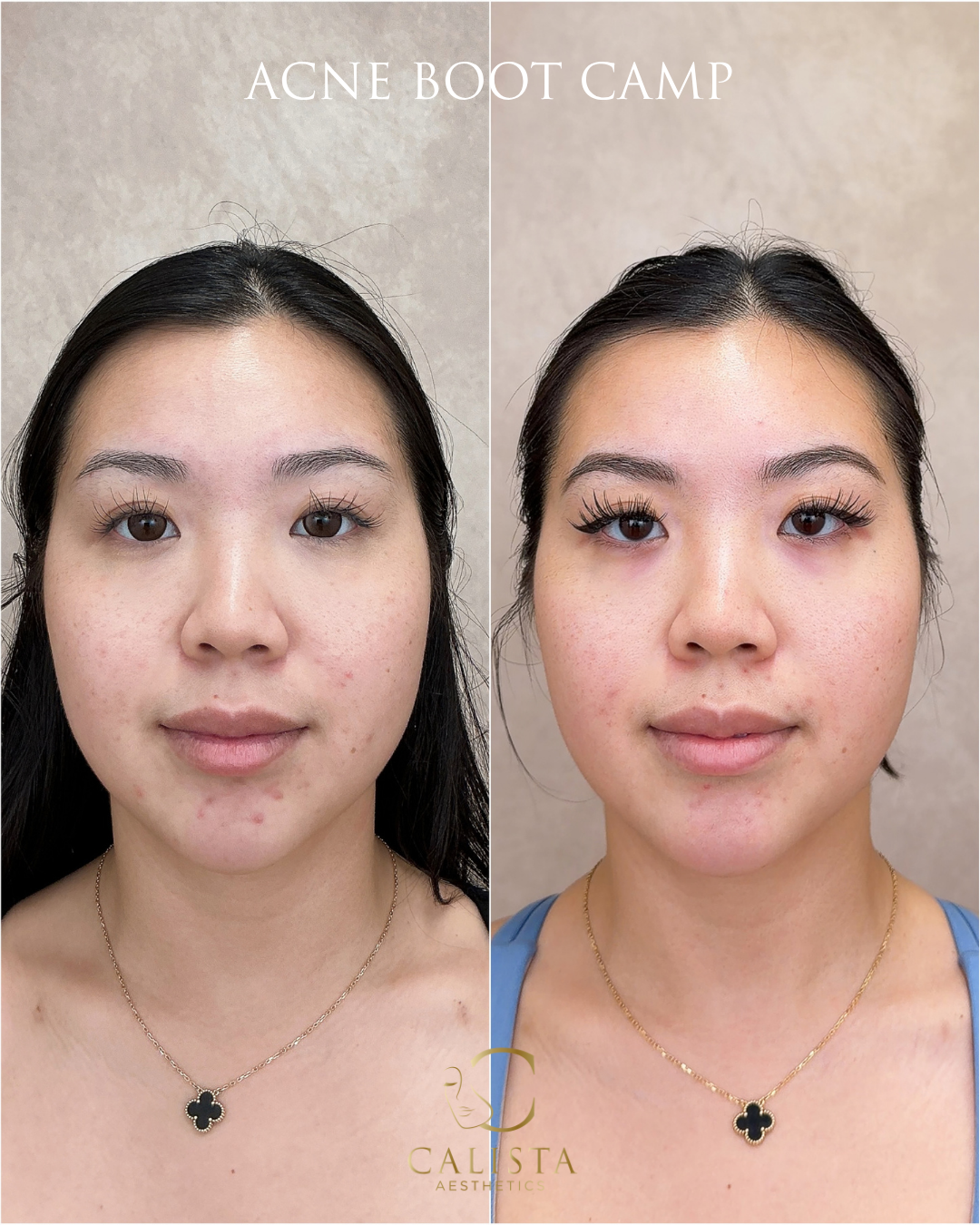
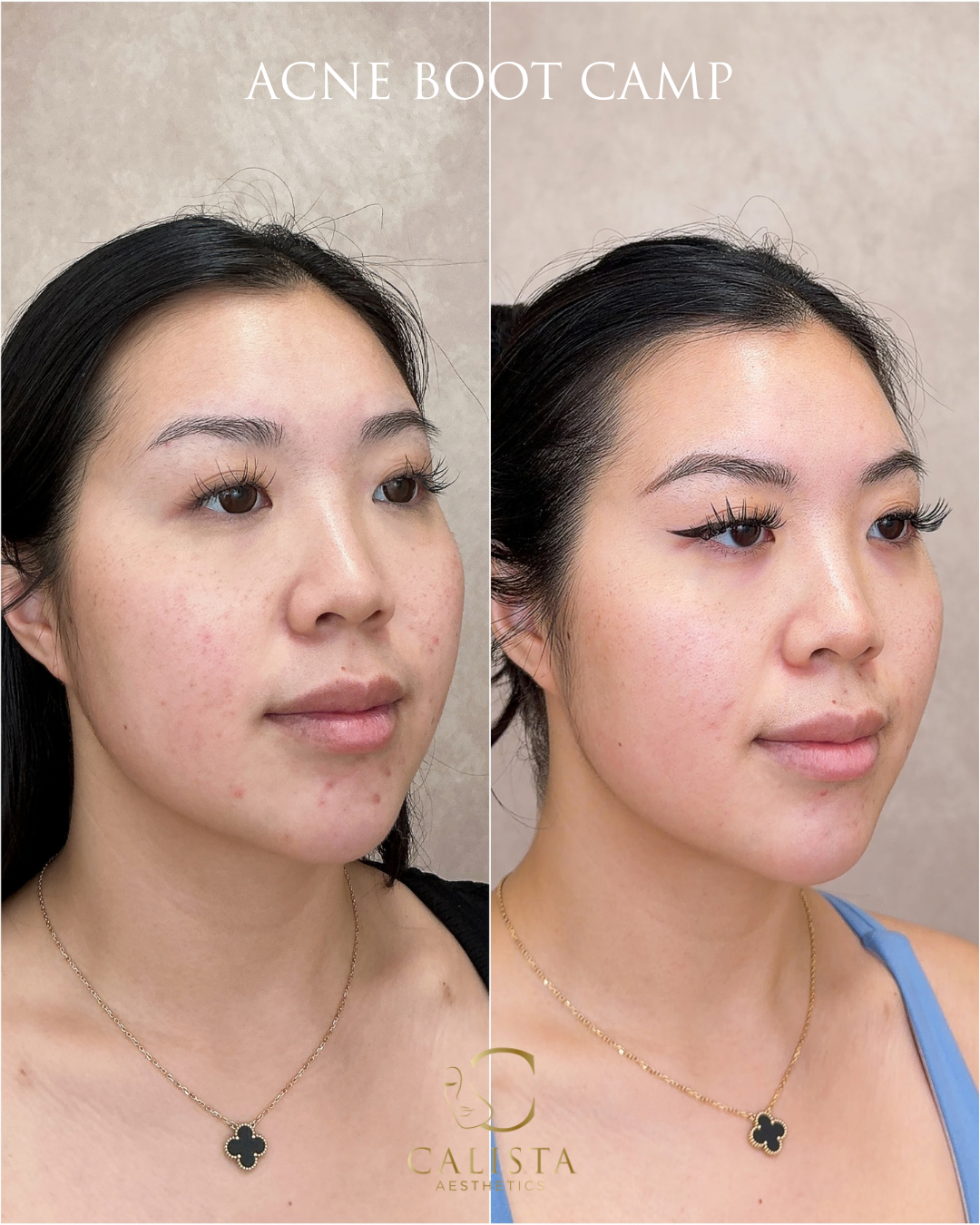
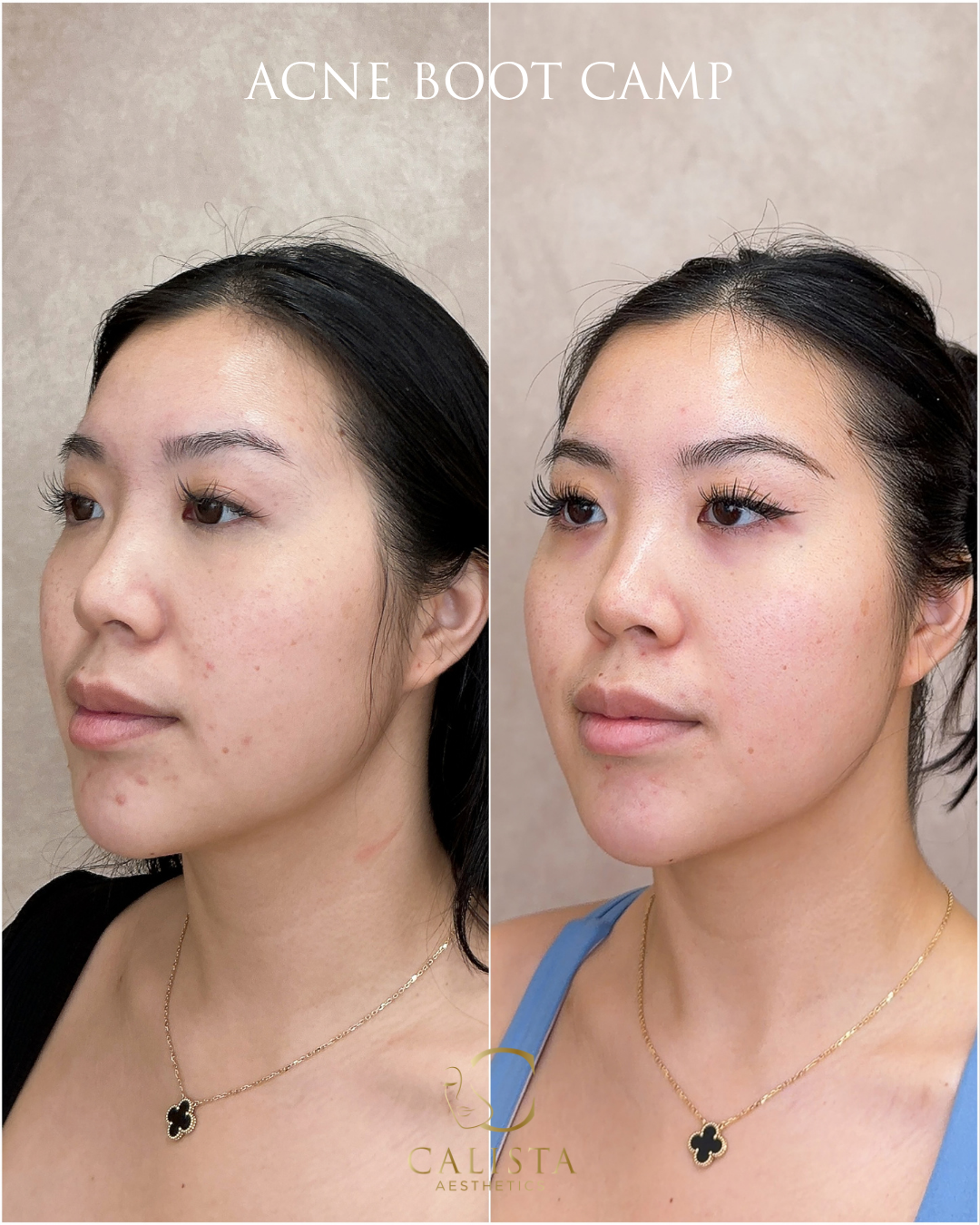
The case shown here was shared by Vi Nguyen, Licensed Esthetician, and Calista Aesthetics under the name Acne Boot Camp. Its accompanying description brings together a personalized routine, professional guidance, treatments and reassessment. It lists extractions, high frequency, blue LED light therapy, a calming mask and chemical peels. That is a description of this case, rather than a standard prescription for everyone who has breakouts. View the source case.
For someone considering acne care in Santa Ana, the most useful lesson is to ask how a plan will be chosen, reviewed and coordinated with any medical treatment you already use.
What this Acne Boot Camp case shows
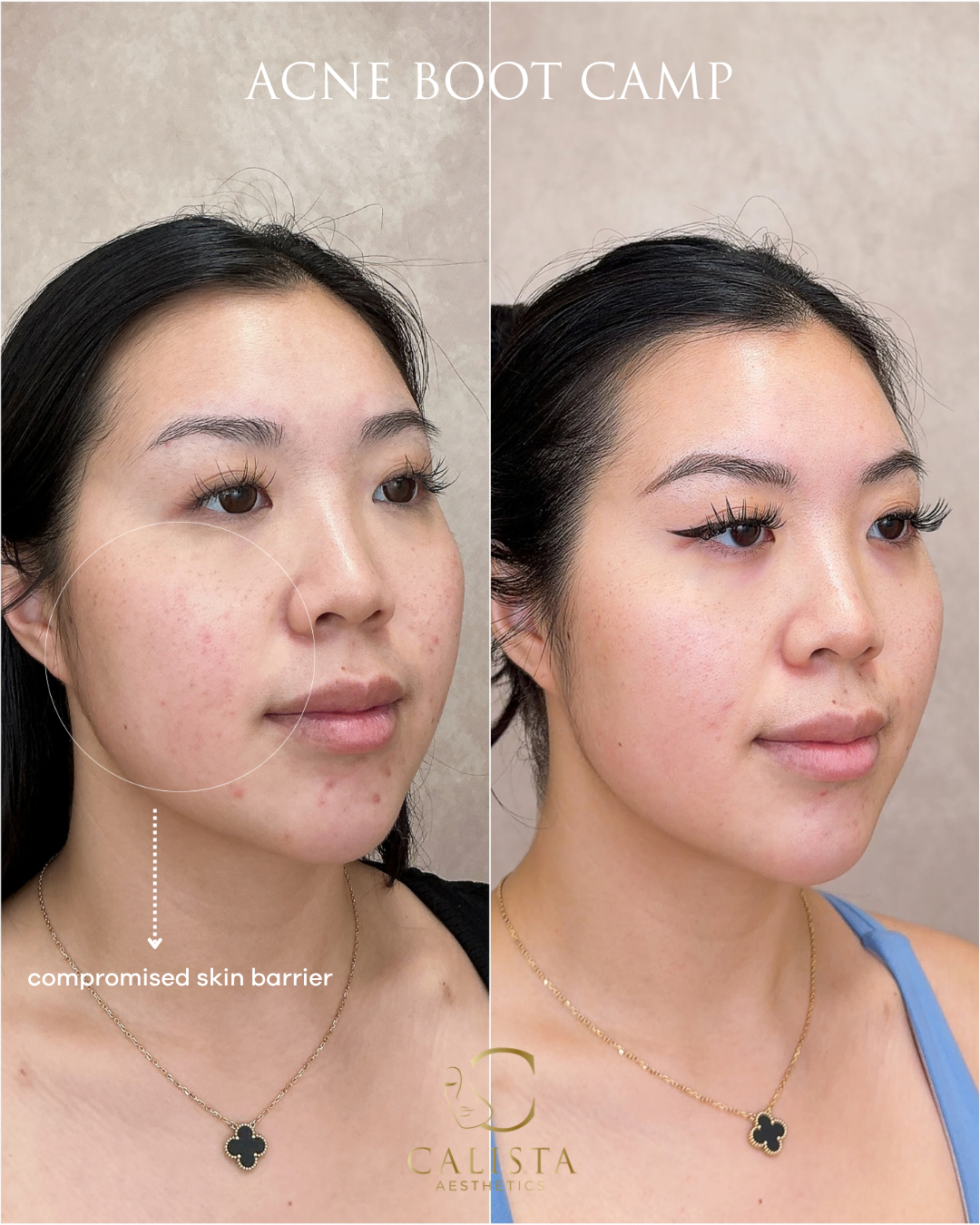
The comparison includes a front-facing view and views from both sides. The additional annotated images return to those same side views; they are not separate patients or additional outcomes.
Read the photographs alongside the case description. The source presents a combination of routine and appointments, with reassessment as part of the process. It does not let us isolate the contribution of the routine, an individual procedure or other care the person may have received.
A photograph also does not provide a diagnosis, a measured clearance percentage or evidence that a result will last. Lighting, angle, makeup and image processing are useful questions when evaluating any comparison. Do not assume those conditions were identical simply because two photographs appear together.
The source’s annotated version uses the phrase “compromised skin barrier.” That is its label, rather than a diagnosis we can independently make from the photograph. Your own skin needs assessment on its own terms.
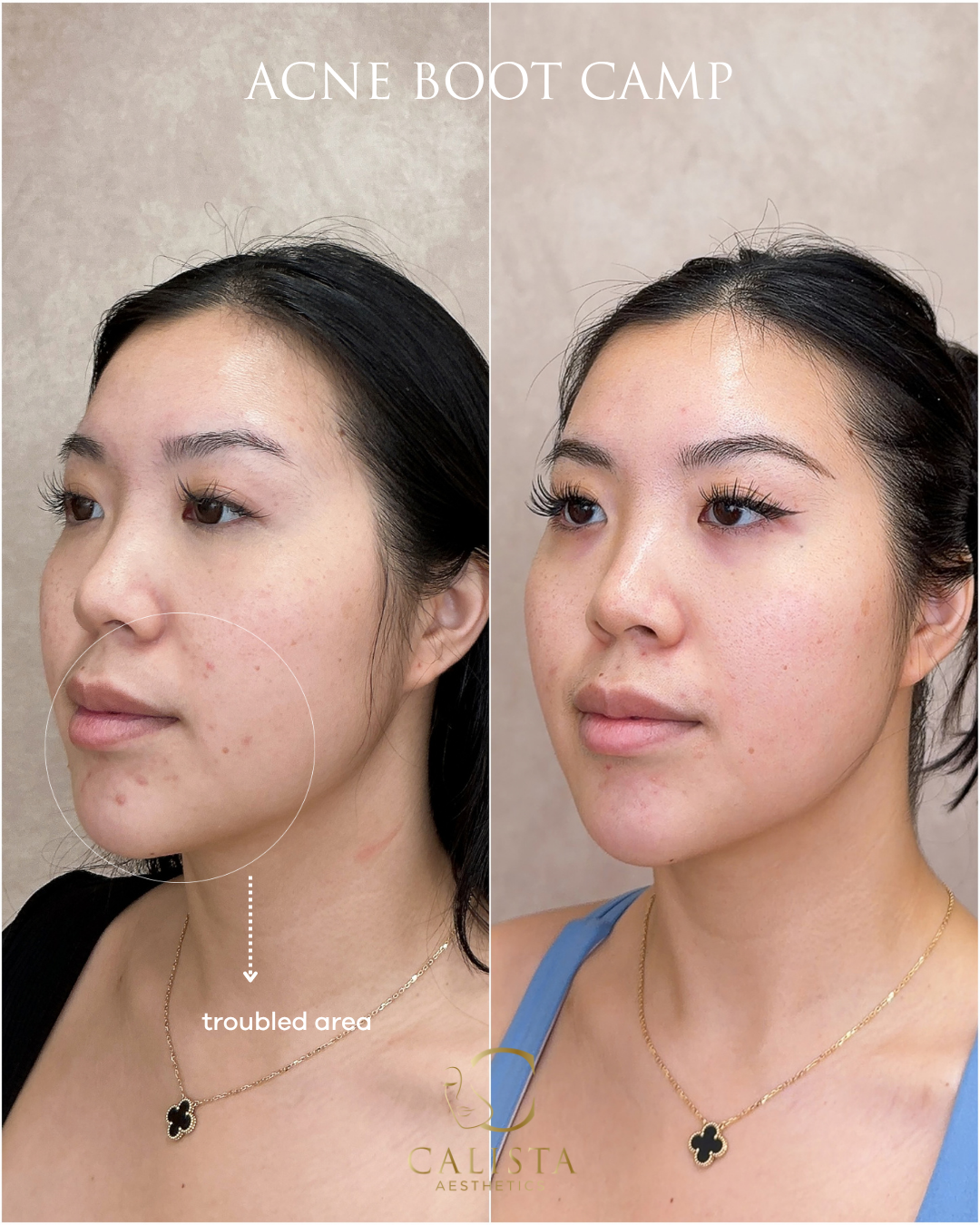
What the source says the plan included
“Acne Boot Camp” is the name attached to this case. Before choosing care under that name, ask what the current plan actually includes and who is responsible for each part.
| Reported part of this case | A useful question for your own consultation |
|---|---|
| Personalized routine | Which products would you recommend for me, and how would they fit my existing treatment? |
| Reassessment | What will we review, and what would lead you to adjust the plan? |
| Extractions | Which areas are appropriate to treat, and which should be left alone? |
| High frequency | Why is this step being considered, and what are its limits? |
| Blue LED light therapy | Which device and treatment are proposed, and what evidence applies to them? |
| Calming mask | What is in the mask, and is it suitable for my skin and known sensitivities? |
| Chemical peels | Which peel, why that choice, and what preparation and recovery would it involve? |
The list does not establish that every step was performed at every appointment. It is not a home-treatment recipe or a reason to combine several procedures yourself.
If extractions are your main question, our facial extractions guide explains the distinction between selected clogged pores and concerns that need a different approach. A single step should be understood within the complete plan.
Reassessment should have a purpose
Before committing, ask your provider to describe what a review appointment is meant to accomplish. Useful discussion points include new breakouts, comfort, reactions, how manageable the routine feels and whether the original goal still fits.
You can prepare a short list: what you used, what changed, what felt uncomfortable and what you want help understanding. That gives the conversation more substance than simply deciding whether your skin looks better in one photograph.
Ask how progress will be documented, who reviews questions between appointments and what happens if the plan is not helping. If a step is changed, ask why and what you should expect next. A review should leave you with clear instructions rather than a growing collection of products you are unsure how to use.
Consistency does not mean enduring irritation or making prescription changes on your own. The American Academy of Dermatology advises patients to discuss irritation and any adjustments to prescribed retinoids with their dermatologist. AAD: acne diagnosis and treatment.
Set expectations around your own skin
A before-and-after is one person’s comparison. It cannot establish your appointment count, the point at which you will notice change or whether you will need ongoing care.
Ask for a review plan that distinguishes an early check on comfort from a later discussion of progress. AAD patient guidance explains that improvement with acne treatment takes time and that the right treatment differs among patients. That general guidance does not establish a timetable for this photographed case or a promise for a named program. AAD: individualized acne care.
It also helps to name the concern you want addressed. Are you asking about ongoing breakouts, flat marks left afterward or changes in skin texture? Those questions can lead to different assessments. Our guide to acne scars and marks explores that distinction; these photographs alone do not establish a scar diagnosis or show that a particular scar treatment was performed.
If your concern is specifically a peel for scars, our chemical-peel article addresses that separate topic. Its presence here does not identify the peel used in this case.
Where esthetic support meets medical acne care
A facial discussion and a medical acne assessment have different purposes. Acne can need medical diagnosis and treatment, and a cosmetic procedure should not delay that conversation.
The AAD’s acne guideline includes evidence-based recommendations for topical and systemic medical treatments. Choosing among them belongs with a qualified clinician who can consider your history and needs. The guideline is not an endorsement of this case, Calista or a combination sold under the name Acne Boot Camp. AAD: acne clinical guideline.
The AAD’s explanation of its guideline also reports insufficient evidence to make recommendations for procedures including chemical peels and laser or light-based devices. That limits the conclusions we can draw about these procedures for acne; it does not prove that every procedure is ineffective. It certainly does not establish which component caused a photographed change. AAD: scope and evidence limits.
Seek a dermatologist’s assessment for deep or painful breakouts, ongoing acne that is not improving, or concerns about scarring. You do not have to complete a facial series before asking for medical help. AAD: when skincare is not enough.
Questions to bring to a consultation
A helpful consultation should make the proposed care understandable and practical. Bring the names of your current skincare products and medications, plus questions about past reactions or recent procedures.
- Who will assess my skin, perform each procedure and review progress?
- What concern are we trying to address, and does it need medical evaluation?
- Which home products and appointment steps are proposed for me?
- How will the plan fit around prescriptions or care from another clinician?
- What are the expected reactions, risks and reasons to contact you?
- What preparation and aftercare will I receive in writing?
- What are the costs, what is included and how are future visits decided?
- If progress is limited or my skin becomes uncomfortable, what happens next?
If a peel is proposed, get instructions for that exact treatment. The AAD describes different recovery needs for different peel depths, so one general “no downtime” promise cannot describe every peel. AAD: chemical-peel questions and recovery.
Discuss your schedule as well as your skin. Work, travel and upcoming events can affect what is practical. Ask before assuming that a procedure and its recovery will fit your plans.
Start with the right conversation in Santa Ana
You can review Calista’s facial options in Santa Ana and Vi Nguyen’s Licensed Esthetician profile before contacting the team. These pages describe existing care options and Vi’s established role; the case name alone does not tell you which appointment to choose.
Ask Calista which consultation is appropriate for an Acne Boot Camp inquiry and whether a medical assessment should come first. Do not assume that booking an unrelated facial reproduces the care shown here.
Calista’s contact page provides the Santa Ana location and ways to reach the team. Bring your questions about the plan, its limits and how it fits your existing care. The goal of that first conversation is a clear next step for your skin.