

Day-by-Day Microneedling Healing Timeline
Microneedling is a popular skin treatments that stimulates collagen production by creating tiny injuries on the skin. While the procedure itself takes only 15–20 minutes, the healing process unfolds over several days and weeks. Here’s a quick breakdown:
Days 1–2: Skin appears red, feels tight, warm, and sensitive – similar to a sunburn. Swelling and mild discomfort are common.
Days 3–5: Redness fades, but flaking and peeling begin as old skin sheds. Skin may feel rough or dry.
Days 6–7: Skin starts to feel smoother and softer. Redness and peeling subside, revealing a refreshed appearance.
Weeks 2–4: Deeper healing occurs as collagen production ramps up. Visible improvements in texture and tone emerge.
Weeks 4–6: Full results appear, including reduced pore size, smoother texture, and softer fine lines.
Aftercare Tips:
Avoid makeup, active ingredients (retinol, acids), and sweating for the first 48–72 hours.
Use a gentle cleanser, hydrating serums, and mineral sunscreen (SPF 30+).
Stay hydrated and avoid picking at peeling skin to prevent scarring or irritation.
Microneedling delivers gradual improvements over time, with collagen production continuing for up to six months. Following proper aftercare ensures optimal results.
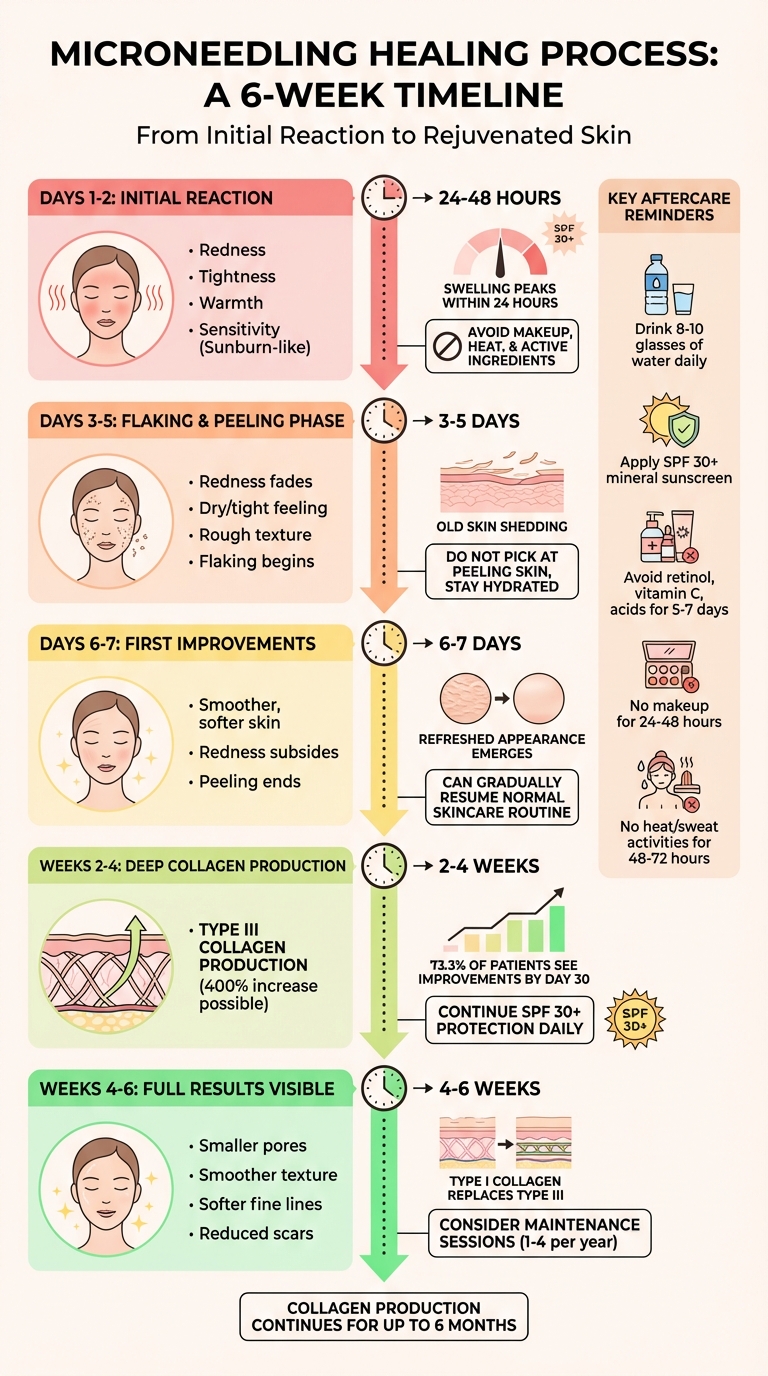
Microneedling Recovery Timeline: Day-by-Day Healing Stages and Symptoms
The Microneedling Aftercare Guide You Never Got (But Actually Need)
Days 1-2: What Happens Right After Treatment
What to Expect
Right after your treatment, your skin will likely appear red and feel like it has a sunburn. This redness is the most noticeable effect – your face might look flushed or even bright red, signaling that your body’s healing process is underway.
Along with the redness, you’ll probably experience tightness, warmth, and sensitivity in the treated area. It’s normal to feel a mild burning or stinging sensation for several hours afterward. Minor swelling is common too, typically peaking within the first 24 hours and easing up by the second day [7]. If you notice pinpoint bleeding, it’s a sign that the needles reached the correct depth to stimulate collagen production.
These early reactions are all part of your skin’s effort to rebuild itself by producing new collagen and elastin. While the redness often fades within a day or two, it may take up to four days for your skin to fully settle [7][8].
Taking care of your skin during this initial phase is key to ensuring a smooth recovery.
Aftercare Tips
The first two days after treatment are critical for healing and achieving the best results. Following proper aftercare steps can make a big difference in how your skin recovers.
Dr. Amanda Doyle, a board-certified dermatologist, emphasizes the importance of being cautious during this period:
“Your skin will have small openings after the microneedling is done, so you need to minimize touching your face and avoid applying your typical skincare routine to avoid irritation and infection” [5].
To care for your skin during these early hours:
Cleansing: For the first 24 hours, wash your face with lukewarm water and only use your hands – skip washcloths or sponges. After this, switch to a gentle, fragrance-free cleanser and apply a hyaluronic acid serum to damp skin to ease tightness and support your skin barrier.
Avoid Makeup: Steer clear of makeup for at least 24 to 48 hours. When you do start using it again, make sure your brushes and sponges are thoroughly cleaned to avoid introducing bacteria into the open micro-channels.
Skip Heat and Sweat: Avoid strenuous exercise, saunas, steam rooms, and hot showers for 48 to 72 hours. Heat and sweat can irritate your healing skin.
Pause Active Ingredients: Hold off on products with retinol, vitamin C, or exfoliating acids like glycolic or salicylic acid for at least 48 to 72 hours [9]. These can cause stinging or even chemical burns on treated skin.
Pain Relief: If needed, take acetaminophen (Tylenol) instead of ibuprofen. Dr. Dendy Engelman, a board-certified cosmetic dermatologist, explains:
“Microneedling works by using your body’s natural inflammatory process… avoid taking ibuprofen during the healing phase, as it can interfere with the recovery process” [5].
Lastly, protect your skin from the sun. Use a mineral sunscreen with SPF 30 or higher that contains zinc oxide or titanium dioxide. These sit on the surface of your skin rather than absorbing into the open micro-channels. If you have to go outside, wear a wide-brimmed hat and avoid direct sun exposure for the first week.
Proper care during these first couple of days sets the stage for better results in the coming weeks.
Days 3-5: Flaking and Peeling Phase
How Your Skin Looks and Feels
By the third day of recovery, your skin begins a new chapter in its healing journey. The redness starts to subside, but you’ll likely notice a dry, tight sensation as your skin transitions into the flaking and peeling phase. This is when your body gets to work, shedding the old, damaged skin cells and making room for fresh, healthy tissue underneath.
“Around day three, you might notice your skin becoming dry and even starting to flake or peel lightly. Don’t be alarmed! This is a positive sign that new, healthy skin cells are pushing their way to the surface.” – MDPen [1]
During this period, your skin may feel rough, almost like sandpaper, as tiny scabs and dead skin cells rise to the surface. It’s common to see small flakes or patches that resemble dandruff as this outer layer naturally sheds away [10].
Some people might also experience minor breakouts or small bumps called milia. These occur because the increased cell turnover can bring underlying congestion to the surface. While this might feel frustrating, it’s a normal part of the process. Supporting your skin with the right care during this phase is essential to ensure the shedding process goes smoothly.
What to Do and Avoid
This is a delicate time for your skin, and your actions can make a big difference in how well it heals. Above all, resist the temptation to pick, scratch, or peel away the flaking skin.
“We still want the body to go through its natural healing processes at this time, and forcibly peeling skin can affect that. It can also transfer bacteria from your hands to your face, which should always be avoided.” – Dr. Dendy Engelman [5]
Pulling at peeling skin can lead to unwanted complications like scarring, infection, or post-inflammatory hyperpigmentation. Let your skin do its thing naturally.
To keep your skin hydrated, apply a hyaluronic acid serum to damp skin, followed by a gentle, fragrance-free moisturizer. Staying hydrated internally is just as important, so aim for at least eight glasses of water daily to support your skin’s repair efforts.
When washing your face, stick to lukewarm water and a mild, non-foaming cleanser. Skip washcloths, cleansing brushes, or any type of physical exfoliation – they can disrupt the shedding process. Also, steer clear of retinol, vitamin C, and exfoliating acids for about 5–7 days to avoid irritation [11].
Sun protection is non-negotiable. Use a broad-spectrum mineral sunscreen with SPF 30 or higher, featuring zinc oxide or titanium dioxide, to shield your sensitive, newly exposed skin from UV damage and hyperpigmentation. And for the first 72 hours, avoid activities that can increase sweating, like strenuous exercise, saunas, or hot showers, as sweat can introduce bacteria into the healing skin.
Days 6-7: First Signs of Improvement
What Changes to Expect
By days 6-7, your skin begins to show the benefits of its renewal process. As the flaking phase wraps up, redness, peeling, and sensitivity start to fade. By the end of the first week, your skin often feels smoother, softer, and more balanced in tone.
“By day seven… skin should be completely healed, and some people even begin to see a noticeable difference in their skin, namely improvements in fine lines, wrinkles, and skin texture.” – Amanda Doyle, M.D., FAAD, Board-certified Dermatologist [5]
Many people notice a subtle “glow” at this stage, as the surface of the skin appears refreshed. However, the deeper work – like collagen remodeling and structural changes – continues for weeks. By day 7, most feel comfortable resuming social activities since the visible signs of treatment, like redness and peeling, are largely gone. Those who underwent RF microneedling may still experience a slightly rough texture, often described as “sandpaper-like”, which typically resolves by this point.
As your skin starts to look and feel better, it’s a good time to adjust your skincare routine to maintain and support the healing process.
Adjusting Your Skincare Routine
Once your skin barrier feels restored, you can slowly return to your usual skincare routine. Start with a gentle cleanser and moisturizer – but only if your skin feels calm and irritation-free.
Hold off on using strong actives like retinol, vitamin C, or exfoliating acids for at least 7 days post-treatment. When you’re ready to reintroduce them, do so gradually, adding one product at a time to gauge your skin’s reaction.
Focus on hydration with products containing hyaluronic acid, and don’t skip daily protection with a broad-spectrum mineral sunscreen (SPF 30 or higher). If you’re ready to wear makeup again, opt for light or mineral-based formulas. Just make sure to clean all brushes and sponges thoroughly to avoid introducing bacteria to your healing skin.
“The treatment of the skin afterward determines the healing and, ultimately, the result.” – Amanda Doyle, M.D., FAAD, Board-certified Dermatologist [5]
Weeks 2-4: Collagen Production and Deeper Healing
How Healing Works Below the Surface
By the second week, the skin may look healed on the surface, but the real work is happening underneath. Fibroblast cells are busy producing new collagen and elastin deep within the dermis, kickstarting a process of renewal [12][4]. During this phase, your skin primarily generates Type III collagen, which acts as a quick fix to smooth out texture and even out tone [12]. Over time, the body transitions into a remodeling phase, replacing this temporary collagen with the stronger and more structured Type I collagen [10][12].
“While your skin may appear healed on the surface after about 14 days, collagen production beneath the skin continues to work towards improving the overall skin quality.” – Christina Nunya, Skincare Author [2]
Microneedling can boost collagen and elastin production by up to 400% within six months when done in a series of four sessions [12]. Even though these changes aren’t immediately visible, your skin is hard at work rebuilding itself. As this internal support system strengthens, you’ll start to notice improvements in firmness, pore size, and overall tone [12][3]. To protect the new collagen, daily use of a broad-spectrum SPF 30+ is essential to shield your skin from UV damage [12][3]. Staying hydrated and eating foods rich in Vitamin C and Zinc can also provide your body with the nutrients it needs for effective tissue repair [3].
Setting Realistic Expectations
While collagen production is underway, visible changes remain subtle during weeks 2–4. This is entirely normal. In fact, about 73.3% of patients report seeing noticeable improvements by day 30 (week 4) [12].
“The immediate glow you get after a treatment is just the preview. The truly profound changes take time to develop as your skin works through its full renewal cycle.” – Olivia Codd, Licensed Aesthetician, Olive Skin Therapy [12]
Neocollagenesis, the process of tissue remodeling, typically starts around week 4. This means the deeper structural changes happening during the first few weeks might not be visible just yet [10]. Collagen remodeling is a slow process, continuing for up to a year, with the most accelerated production occurring in the first six months after treatment [10][12][2]. A series of 3–6 treatments spaced 4–6 weeks apart often delivers the best long-term results, improving texture and firmness over time [3][2][4]. This gradual transformation highlights the importance of committing to a full treatment plan.
For personalized microneedling advice and aftercare tailored to your skin’s needs, reach out to the expert team at Calista Aesthetics.
Weeks 4-6: Full Results Appear
What Final Results Look Like
By weeks 4–6, your skin undergoes a noticeable transformation as the temporary collagen formed earlier is replaced by stronger Type I collagen. This fortifies your skin’s structure, leading to visible improvements.
“It is at this point that you will begin to notice the tightening of the pores, the filling of acne scars and the softening of fine lines.” – Konmison [10]
During this phase, you’ll likely see smaller pores, a smoother texture, and a more even tone. Fine lines appear softer, and acne scars begin to fill in, thanks to your skin’s strengthened foundation.
“The full effects of a Corrective Microneedling™ treatment are typically visible around four to six weeks post-procedure, as your skin completes its powerful rejuvenation cycle.” – Kevin Simons, MDPen [1]
While collagen production continues for several months, the most dramatic changes become apparent during this 4- to 6-week period. For deeper concerns like prominent scars or wrinkles, a series of three to six sessions spaced 4 to 6 weeks apart may be recommended to achieve optimal results.
To maintain these improvements, it’s essential to adjust your skincare routine accordingly.
How to Maintain Your Results
As your skin completes its remodeling phase, protecting and preserving these results becomes crucial. Start by using a broad-spectrum SPF 30+ daily to shield your skin from UV damage, which can lead to hyperpigmentation and undo your progress. Keep your skin hydrated with hyaluronic acid, which supports cell renewal and maintains moisture.
For long-term results, consider scheduling 1–4 maintenance sessions each year to sustain collagen production and keep your skin looking its best. Once your skin has fully recovered from any sensitivity, you can gradually reintroduce active ingredients like retinoids or Vitamin C. However, always consult your provider before making changes to your routine.
For tailored advice on maintaining your microneedling results and planning future treatments, connect with the professionals at Calista Aesthetics.
Aftercare Practices for Every Stage
Following consistent aftercare routines throughout your recovery can make a big difference in your healing process. Taking care of your skin after treatment ensures it heals properly and looks its best.
Keeping Your Skin Hydrated
Hydration is key, both inside and out. Aim to drink 64–80 oz (8–10 cups) of water daily to keep your body hydrated. For your skin, apply hyaluronic acid to damp skin to help lock in moisture. As Kevin Simons from MDPen explains:
“Hyaluronic acid is a powerhouse hydrator that draws moisture into the skin, helping to soothe, plump, and reduce any feelings of tightness.” [4]
During the first 24 hours, stick to rinsing your skin with lukewarm water – skip all cleansers or products [4]. After that, switch to a gentle, pH-balanced, fragrance-free cleanser, and use your fingertips for application. If your skin feels dry or rough around day three, you can add a rich emollient like Aquaphor or coconut oil to help seal in moisture [7]. Serums with ingredients like copper peptides, growth factors, or cica are also great for supporting your skin’s barrier and speeding up the healing process [3].
Protecting Your Skin from the Sun
After treatment, your skin is especially sensitive and more prone to UV damage. Start using a mineral sunscreen with SPF 30+ right away to protect it from harmful rays [8]. Mineral sunscreens with zinc oxide or titanium dioxide are gentler on sensitive skin compared to chemical alternatives.
Dr. Dendy Engelman, a cosmetic dermatologist, highlights the importance of sun protection:
“Skin is extremely sensitive to sun damage after microneedling, so sunscreen should be applied daily and often reapplied for the two weeks following treatment.” [5]
Make sure to reapply sunscreen frequently, especially if you’re spending time outdoors. Wearing hats or other protective accessories can also help shield your skin while it heals.
What to Avoid During Recovery
In addition to staying hydrated and protecting your skin from the sun, it’s just as important to steer clear of anything that could irritate or slow down healing. Avoid using active ingredients like retinoids, Vitamin C, or AHAs/BHAs for the first 5–7 days [6]. Similarly, skip makeup for the first 24–48 hours [13] and avoid physical exfoliation tools like scrubs, washcloths, or cleansing brushes for at least a week [13].
Stay away from heat and sweat-inducing activities like saunas, steam rooms, hot showers, or intense exercise for the first 48–72 hours [13]. Dr. Engelman also advises against using ibuprofen during this time:
“Since microneedling works by using your body’s natural inflammatory process… avoid taking ibuprofen during the healing phase, as it can interfere with the recovery process.” [5]
If you need pain relief, opt for acetaminophen (Tylenol) instead. Finally, resist the urge to pick at or scratch any flaking skin. Let it shed naturally to avoid scarring or infection [13].
magic happens beneath the surface, as collagen remodeling progresses over the next 4–6 weeks, with visible improvements continuing for up to six months [2]. Leon Garber, CEO of Dermacare of Hampton Roads, puts it perfectly:
“The collagen and elastin that’s changing the appearance of your skin is produced by your own body. This accelerated production will continue for about six months after your procedure” [2].
While the early stages of recovery are noticeable, the long-term effects are where microneedling truly shines. Each session builds upon the last, offering benefits that go far beyond what surface treatments can achieve.
To make the most of your results, proper aftercare is essential. Staying hydrated, applying a broad-spectrum SPF 30+ mineral sunscreen, and steering clear of harsh active ingredients for at least 5 to 7 days are simple but crucial steps [6]. These habits not only protect your skin but also enhance the rejuvenating effects of the treatment over time.
FAQs
You might start seeing some changes from microneedling within 1 to 2 days. During this period, your skin could look a bit red and feel more sensitive. As the redness fades over the next few days, your skin will likely appear softer, brighter, and more rejuvenated.
The complete effects of microneedling take longer to show. As your skin ramps up collagen production, you’ll notice gradual improvements in texture, tone, and firmness in the weeks that follow. To get the best results, stick to your provider’s aftercare guidance, stay hydrated, and protect your skin from the sun.
During your microneedling recovery, taking care of your skin is crucial to ensure proper healing. For the first 24-48 hours, skip makeup entirely. Wearing makeup during this time could clog your pores or introduce bacteria, which might interfere with the healing process. Stick to gentle skincare and avoid products with ingredients like retinoids, vitamin C, or exfoliating agents – they can irritate your sensitive skin. Also, be extra gentle when cleansing; no scrubbing or vigorous washing.
It’s best to avoid intense exercise, heavy sweating, and direct sun exposure during this period, as these can lead to inflammation and slow down recovery. If you need to be outdoors, make sure to apply a broad-spectrum sunscreen with SPF 30 or higher to shield your skin from UV damage. Following these steps will help your skin recover smoothly and give you the best possible results from your treatment.
Microneedling involves creating tiny, controlled micro-injuries on the surface of your skin. These micro-injuries kickstart your body’s natural healing process, encouraging skin cells known as fibroblasts to generate new collagen and elastin – the proteins that help keep skin firm and youthful.
As your skin heals, you may notice gradual improvements in texture, tone, and elasticity. This makes microneedling a popular option for addressing fine lines, acne scars, and various other skin concerns.