

Microneedling vs. Hydration Facials for Skin Texture
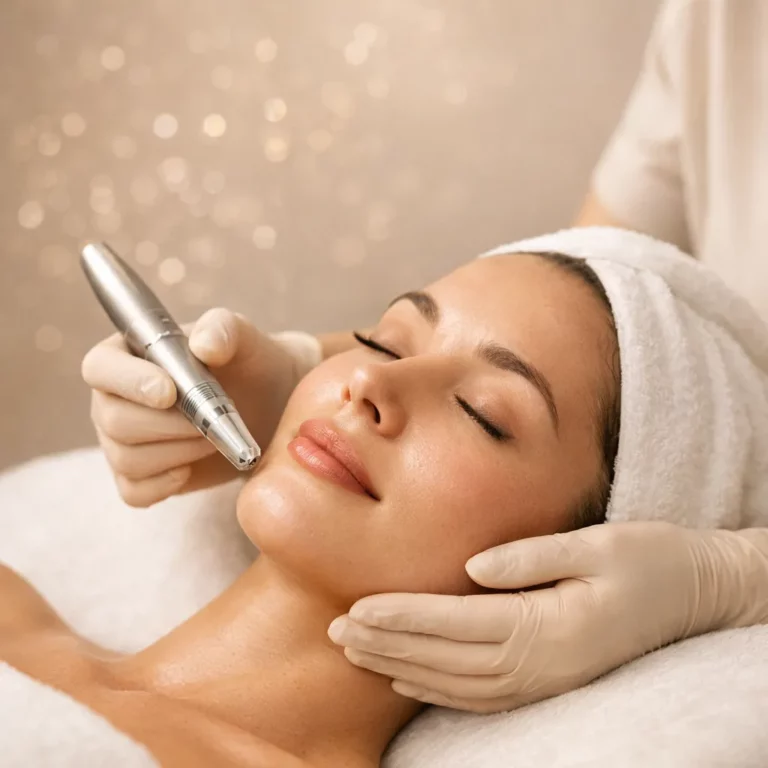
Microneedling and hydration facials offer two distinct approaches to improving skin texture. Microneedling works by creating tiny micro-injuries in the skin to stimulate collagen production, addressing deeper concerns like acne scars, wrinkles, and skin laxity. In contrast, hydration facials focus on surface-level issues such as dryness, dullness, and clogged pores by cleansing, exfoliating, and infusing serums for immediate glow and hydration.
Key Differences:
Microneedling: Targets deeper skin layers, promotes long-term collagen production, and is ideal for scars and wrinkles. Results take 3–6 months to peak, with mild downtime.
Hydration Facials: Focus on the skin’s surface, providing instant results with no downtime. Best for quick hydration and radiance before events.
Quick Comparison:
Factor | Microneedling | Hydration Facial |
|---|---|---|
Depth | Dermis (0.1–3.0 mm) | Epidermis (surface only) |
Purpose | Collagen repair, scars | Hydration, glow |
Results Timeline | 3–6 months | Immediate |
Downtime | 1–3 days | None |
Cost | $300–$600/session | $175–$300/session |
If you’re looking for long-term skin repair, microneedling is the better option. For a quick, no-downtime glow, go for a hydration facial. Both treatments can complement each other based on your goals and schedule.
HydraFacial vs Microneedling: Which Treatment Should You Do First?
What is Microneedling?
Microneedling, often referred to as Collagen Induction Therapy (CIT) or Percutaneous Collagen Induction (PCI), is a minimally invasive skin treatment that uses a handheld device equipped with fine needles to create controlled micro-injuries on the skin’s surface. These tiny punctures stimulate the body’s natural wound-healing process, encouraging the production of collagen and elastin to improve skin structure and texture [5][8].
This procedure targets both the epidermis (the skin’s outermost layer) and the dermis (the deeper layer). Professional microneedling devices can penetrate the skin to depths ranging from 0.5 mm (for fine lines) to 3.0 mm (for deeper scars), with sessions typically costing between $250 and $700 [1][7][8]. To achieve the best results, most people undergo three to six sessions, spaced four to six weeks apart [5][10].
Let’s take a closer look at how this treatment works on a cellular level.
How Microneedling Works
When the fine needles create micro-injuries in the skin, they set off a three-phase healing process. Here’s what happens:
Inflammation: The immune system responds by cleaning out the micro-wounds.
Proliferation: Granulation cells form temporary collagen to support the skin.
Remodeling: The temporary matrix is replaced with Type I collagen and elastin, which strengthen and rejuvenate the skin [5][8].
Research highlights the impressive effects of microneedling. For instance, a study found that four sessions spaced a month apart resulted in a 400% increase in collagen and elastin production six months after the final treatment [9].
The procedure also creates microchannels in the skin, allowing topical serums – like hyaluronic acid or Vitamin C – to penetrate more deeply and work more effectively. Dr. Tito Vasquez, a plastic surgeon from Yale Medicine, explains:
Creating tiny channels enables deeper serum infusion, boosting collagen and enhancing skin texture. [8]
Visible improvements typically appear six to eight weeks after treatment, as the newly formed collagen begins to take shape. Full results continue to develop over three to six months as the remodeling phase concludes [1][11].
Benefits of Microneedling
Microneedling addresses a variety of skin concerns by working within the skin’s deeper layers. It’s particularly effective for reducing acne scars, with dermatologists reporting a 60% to 70% improvement in broad acne scars after four to six treatments [6]. This works by breaking down old collagen bundles in the superficial dermis that contribute to scar formation [12].
In addition to scar reduction, microneedling can help with:
Smoothing fine lines and wrinkles
Shrinking enlarged pores
Improving skin firmness and elasticity
Reducing stretch marks, uneven skin tone, and mild skin laxity
Clinical trials for the SkinPen device revealed that 90% of participants would recommend microneedling to friends and family [6].
Unlike laser treatments, which rely on heat, microneedling is a safer option for individuals with darker skin tones (Fitzpatrick types V–VI) because it doesn’t carry the same risk of pigmentation changes [4]. Recovery is quick – most people experience redness similar to a mild sunburn for 24 to 48 hours, with complete healing usually occurring within three to five days [5][11].
What is a Hydration Facial?
A hydration facial is a non-invasive, medical-grade skincare treatment that cleanses, exfoliates, removes impurities, and infuses hydrating serums – all in one session. Unlike microneedling, which targets deeper layers of the skin, hydration facials work on the surface to deliver instant moisture and a radiant glow. Dr. Glen Crawford, Chief Medical Officer for Schweiger Dermatology Group, highlights the process:
In one session, aestheticians can use the HydraFacial [device] to cleanse, exfoliate, extract, and deliver a variety of rejuvenating serums.[13]
Globally, about 3.5 million HydraFacial treatments are performed each year[13]. A standard session lasts 30 to 45 minutes and costs around $199, though prices may vary depending on location[13][14]. With no recovery time needed, it’s a go-to option for achieving glowing, makeup-ready skin – perfect before a big event. Now, let’s dive into how this treatment actually works.
How Hydration Facials Work
Hydration facials rely on a patented Vortex-Fusion technology that creates a swirling fluid motion to remove impurities while delivering active ingredients into the skin. The process is broken down into three straightforward steps:
Cleanse and Peel: Liquid exfoliation sweeps away dead skin cells.
Extract and Hydrate: Suction clears out debris while infusing moisturizers.
Fuse and Protect: Custom serums are applied to address specific concerns like hyperpigmentation, dullness, or fine lines.[13][15]
Studies suggest that this combination of exfoliation and antioxidant-packed serums can boost skin antioxidant levels by 32%[13]. In research on similar hydradermabrasion treatments, participants who underwent six weekly sessions saw increased thickness in both the outer skin layer and the collagen-rich papillary layer[13]. Master Aesthetician Sarah Akram describes the method:
The [HydraFacial] device uses an exfoliating tip paired with suction to remove dead skin cells from the surface of your face. After skin is exfoliated, serums are infused into the skin.[13]
Benefits of Hydration Facials
Hydration facials deliver instant results, leaving skin plump, dewy, and glowing. Dr. Gretchen Frieling, a dermatopathologist, shares:
Many patients report seeing visible skin refinement and an even, radiant skin tone after just one treatment.[13]
The effects typically last 4 to 6 weeks[18].
These facials tackle a variety of surface-level concerns, including smoothing fine lines, brightening uneven or dull skin, unclogging pores, minimizing the look of enlarged pores, and deeply hydrating dry skin[15][17][19]. Dr. Joshua Zeichner, Director of Cosmetic and Clinical Research in Dermatology at Mount Sinai Hospital, explains:
Depending on the specific active [ingredients] used in the HydraFacial, the treatment can improve hydration, radiance, and even skin texture and pore size.[13]
The treatment is gentle enough for all skin types, including sensitive skin and those with rosacea, as it uses liquid exfoliation rather than abrasive crystals or harsh chemicals[15][16][18]. Monthly sessions are recommended for ongoing results[18], and applying SPF 30 or higher afterward is crucial to protect the skin, as exfoliation increases sun sensitivity[18].
Microneedling vs. Hydration Facials: Direct Comparison
Comparison Factors
Microneedling works by penetrating the dermis (0.1–3.0 mm deep), creating controlled micro-injuries to stimulate collagen production [4]. On the other hand, hydration facials focus solely on the epidermis, using gentle exfoliation and serum infusion to enhance skin hydration and texture [15].
The timeline for results highlights the difference between these two treatments. A 2025 split-face study revealed that three monthly microneedling sessions at a depth of 1.5 mm led to a 52% average reduction in acne scar scores, with full results becoming evident within 3 to 6 months [20]. Meanwhile, the same study showed that three monthly HydraFacials improved skin texture by 24%, but the benefits peaked and plateaued by day 10 [20].
Pain levels and recovery time also vary. Microneedling typically scores 2.3/10 on the pain scale, with many patients at our med spa in Santa Ana opting for numbing cream, while hydration facials are far gentler, scoring just 0.5/10 and often described as relaxing [20]. Recovery from microneedling may involve mild redness and swelling lasting 1 to 3 days, though many people resume daily activities within 24 hours. Hydration facials, in contrast, require no downtime at all [15].
The longevity of results is another key distinction. Microneedling promotes collagen III production, which can remain active in the skin for 5 to 7 years, making it a long-term solution for structural skin repair [23]. Hydration facials, while offering immediate results, are more temporary and typically require monthly sessions to sustain that refreshed, glowing look [15]. A systematic review reported that microneedling achieved a 45–80% reduction in scar severity over 3 to 6 sessions [20].
The table below summarizes these differences to help you decide which treatment aligns better with your skincare goals.
Comparison Table
Factor | Microneedling | Hydration Facial |
|---|---|---|
Treatment Depth | Dermal layer (0.1–3.0 mm) | Surface/epidermis only |
Primary Goal | Collagen remodeling & scar repair | Instant hydration & glow |
Results Timeline | 3–6 months for peak results | Immediate (same day) |
Downtime | 1–3 days of mild redness/swelling | None |
Pain Level | Mild (2.3/10); numbing optional | Very low (0.5/10); relaxing |
Best For | Acne scars, deep wrinkles, skin laxity | Dullness, dryness, clogged pores |
Longevity | Long-term (5–7 years) | Short-term (4–6 weeks) |
Typical Cost | $300–$600 per session | $175–$300 per session |
Recommended Series | 3–6 sessions, spaced 4 weeks apart | Monthly maintenance |
Sensitive Skin | Avoid with active acne/eczema | Suitable for rosacea & eczema |
Which Treatment is Right for You at Calista Aesthetics?
If you’re looking to tackle atrophic acne scars, deep wrinkles, or noticeable texture issues, microneedling with SkinPen and PRP might be your best bet [20][14]. This treatment works deep within the skin by creating thousands of tiny micro-channels, which kickstart collagen production for lasting improvement. While results take time to fully develop – typically over 3 to 6 months [24][27] – the addition of PRP (platelet-rich plasma) speeds up healing and enhances collagen growth. In fact, 18.5% of patients reported an “excellent” response with microneedling and PRP, compared to just 7% for microneedling paired with Vitamin C [25].
On the other hand, hydration facials are perfect for addressing surface-level issues like dullness, dehydration, and clogged pores [20][21]. These facials deliver quick, no-downtime results, with 92% of users noticing immediate hydration – making them ideal for prepping your skin before an event [28]. For those with sensitive or reactive skin, including conditions like rosacea, hydration facials are gentle, with an adverse event rate of less than 1% [20].
“Evidence points to HydraFacial for instant glow, hydration, and sensitive or reactive complexions; microneedling leads for dermal-depth targets like acne scars and etched lines.” – Coastal Health & Medical Spa [20]
Timing matters. If you have an event coming up, a hydration facial can be scheduled just 1–2 days beforehand to achieve that radiant glow. However, microneedling requires more planning – book your session 4–6 weeks in advance to allow time for collagen remodeling [22][29][26]. Many clients at Calista Aesthetics combine both treatments for the best of both worlds: monthly hydration facials to maintain pore clarity and skin health, alongside a series of 3 to 6 microneedling sessions spaced about 4 weeks apart for deeper, corrective results [20][14].
To ensure the treatments align with your skin type, goals, and schedule, Calista Aesthetics offers personalized consultations. Their team will help you create a plan that fits your texture concerns, downtime preferences, and budget.
Microneedling and hydration facials each bring distinct benefits to the table, catering to different skin concerns and goals. Microneedling works beneath the surface, targeting the dermal layer to stimulate collagen production through controlled micro-injuries. This makes it a go-to option for addressing acne scars, deep wrinkles, and enlarged pores, with results typically peaking around three months [30][3][31]. Following a proper microneedling aftercare routine is essential to ensuring these results develop smoothly. On the other hand, hydration facials focus on the epidermis, delivering a quick boost of moisture with serums like hyaluronic acid. These treatments leave the skin looking refreshed and radiant, with effects lasting between one to four weeks.
“Microneedling is an appropriate treatment for those looking to improve the texture and appearance of their skin… [it] evens skin tone [and] minimizes acne scars.” – Skin Secrets Dermatology [30]
Each treatment shines in its own way, addressing specific needs. Microneedling is ideal for those seeking long-term improvements in skin texture and tone, while hydration facials are perfect for an instant pick-me-up. The best choice depends on your individual concerns, tolerance for downtime, and how quickly you want to see results.
Whether you’re after deep skin repair or an immediate glow, consulting with Calista Aesthetics can help you create a customized treatment plan tailored to your skin type, goals, and history.
FAQs
Microneedling works by creating tiny, controlled micro-injuries in the skin. These micro-injuries kickstart your skin’s natural ability to produce collagen and elastin, which are essential for maintaining a smooth, firm, and even skin texture. Over time, this process can lead to noticeable improvements in skin tone, firmness, and texture. It’s especially helpful for reducing the appearance of fine lines, acne scars, and uneven skin surfaces.
Hydration facials, on the other hand, are all about delivering a boost of intense moisture to your skin. By using specialized serums, these treatments leave your skin feeling softer and looking radiant almost immediately. However, their effects are more short-lived, as they focus on surface-level hydration rather than stimulating deeper changes within the skin.
The good news? These treatments don’t have to be an either-or decision. Depending on your skin goals, they can work together beautifully. For expert advice tailored to your needs, consider consulting professionals like those at Calista Aesthetics, who can help you decide which treatment – or combination of treatments – is right for you.
Microneedling is considered safe for virtually all skin types, including darker skin tones. Its approach focuses on boosting collagen production without causing noticeable harm to the skin’s surface, making it a versatile option for many.
That said, individuals with darker skin tones might occasionally encounter mild post-inflammatory hyperpigmentation. This side effect is uncommon, typically short-lived, and can often be avoided or minimized by adhering to proper aftercare guidelines. To ensure the best outcome, it’s crucial to consult with a skilled professional who has experience treating a variety of skin types.
For the best outcomes, consider scheduling a hydration facial every 4 to 6 weeks. This timing works in harmony with your skin’s natural renewal process, keeping your complexion looking fresh, glowing, and well-hydrated.
Consistent treatments can enhance your skin’s texture, increase moisture levels, and promote overall skin wellness. That said, the perfect routine can differ depending on your skin type and personal goals – working with a skincare expert can help create a plan that’s just right for you.