

Mineral vs. Chemical Sunscreens for Sensitive Skin
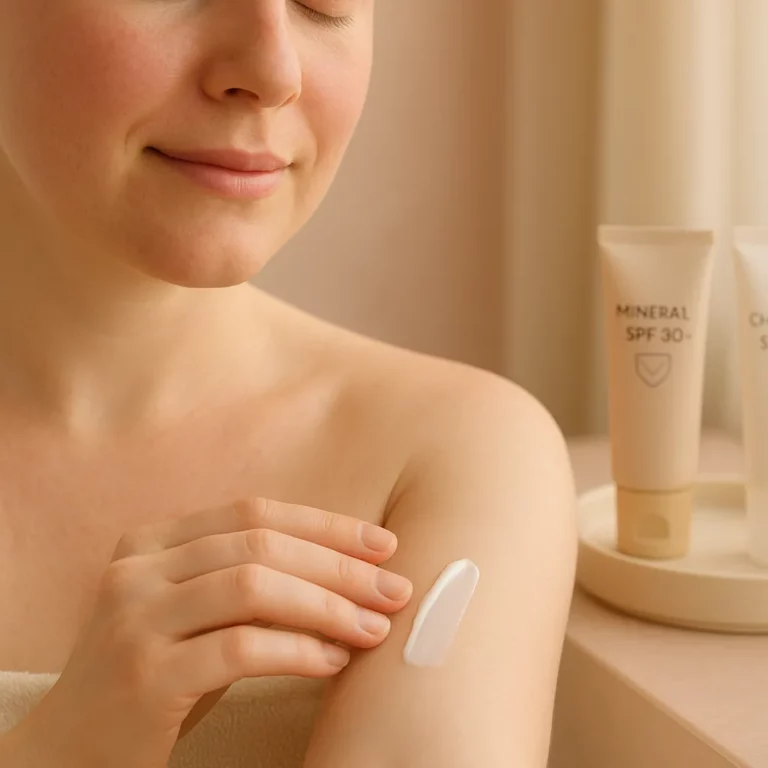
When it comes to protecting sensitive skin, mineral sunscreens are often the better choice. They use zinc oxide or titanium dioxide to reflect UV rays, offering immediate protection without causing irritation. In contrast, chemical sunscreens absorb UV rays and convert them to heat, which can lead to stinging, redness, or allergic reactions for those with delicate skin.
Key takeaways:
Mineral Sunscreens: Gentle, work instantly, less likely to irritate, but may leave a white cast.
Chemical Sunscreens: Lightweight, invisible finish, require 15–20 minutes to activate, but may irritate sensitive skin.
For anyone managing eczema, rosacea, or post-treatment care, mineral sunscreens are highly recommended. To ensure proper protection, choose a broad-spectrum SPF 30+ sunscreen and reapply every two hours. If you’re unsure which to pick, consult a skincare professional for tailored advice.
Quick Comparison
Feature | Mineral Sunscreen | Chemical Sunscreen |
|---|---|---|
Active Ingredients | Zinc oxide, titanium dioxide | Avobenzone, octinoxate, etc. |
How It Works | Reflects UV rays | Absorbs UV rays, converts to heat |
Time to Work | Immediate | 15–20 minutes |
Skin Tolerance | Great for sensitive skin | May cause irritation |
Finish | May leave a white cast | Lightweight, invisible |
Reef Safety | Safer for marine life | Some ingredients harm coral reefs |
Both types can provide effective UV protection, but mineral sunscreens are generally safer for sensitive or reactive skin.
Chemical vs Physical (Mineral) Sunscreens! Which is Better & Safer ?
How Each Type of Sunscreen Works
Mineral and chemical sunscreens shield the skin in distinct ways. For individuals with sensitive skin, knowing how these two types function can help in choosing the right product.
Mineral Sunscreens: A Physical Barrier
Mineral sunscreens rely on active ingredients like zinc oxide and titanium dioxide to create a protective layer on the skin’s surface. This layer reflects UVA and UVB rays as soon as it’s applied. Because they don’t break down under sunlight, mineral sunscreens provide steady protection during long periods outdoors. Their photostable nature ensures consistent coverage without frequent reapplication, making them a reliable option for sensitive skin.[5]
Chemical Sunscreens: Absorbing UV Rays
Chemical sunscreens take a different approach by absorbing UV radiation. They use organic compounds such as avobenzone, octinoxate, and oxybenzone to soak up harmful rays and then convert that energy into heat. Unlike mineral sunscreens, they need about 15–20 minutes to start working after application. Their lightweight texture and transparent finish make them a favorite for everyday use, though they may occasionally irritate sensitive skin.[5]
Broad-Spectrum Protection for All
Both types aim to protect against the full UV spectrum. When properly formulated, mineral and chemical sunscreens can deliver broad-spectrum coverage. The American Academy of Dermatology suggests choosing sunscreens labeled “broad-spectrum” with an SPF of 30 or higher for effective daily defense.[3] Whether you prefer a physical or chemical option, ensuring broad-spectrum protection is key to safeguarding your skin. Up next, we’ll explore how these formulations perform on sensitive skin.
Which Type Works Better for Sensitive Skin
When it comes to sensitive skin, mineral sunscreens often take the lead over chemical formulas due to their gentle nature and lower likelihood of causing irritation. The main distinction lies in how these sunscreens interact with the skin and their potential to provoke unwanted reactions.
Skin Reactions and Allergies
Mineral sunscreens are known for being kind to sensitive skin. They rarely cause irritation or allergic reactions, even when applied near delicate areas like the eyes or on compromised skin. This is because their active ingredients – zinc oxide and titanium dioxide – are inert. They don’t chemically react with the skin or penetrate deeply, making them a safer option for those prone to sensitivity.
On the other hand, chemical sunscreens can be problematic for sensitive individuals. They may cause stinging, redness, or allergic reactions, especially for those with reactive skin. Additionally, the heat generated during UV absorption can create an uncomfortable sensation, further increasing the risk of irritation.
Best Uses for Mineral Sunscreens
Mineral sunscreens are particularly beneficial for people with specific skin conditions. Dermatologists often recommend them for individuals who require extra care. For instance:
Eczema: Mineral sunscreens are less likely to provoke inflammation or trigger flare-ups.
Rosacea: These formulas can provide relief as they don’t generate heat or cause stinging sensations.
Children and Infants: The American Academy of Pediatrics recommends mineral sunscreens for young ones with sensitive skin, emphasizing their safety.
They are also ideal for post-treatment skin. Whether recovering from chemical peels, microneedling, or laser treatments, skin needs gentle protection. Mineral sunscreens offer effective coverage without interfering with the healing process. At Calista Aesthetics, for example, they are often included in customized skincare plans for clients with sensitive skin or those recovering from aesthetic treatments. This approach ensures protection while supporting healing and reducing irritation.
Important Formula Features
Choosing the right sunscreen goes beyond active ingredients. The formulation itself plays a crucial role in minimizing irritation. Here are some key features to look for:
Fragrance-Free: Added scents can irritate sensitive or compromised skin barriers.
Non-Comedogenic: Mineral sunscreens typically avoid clogging pores, making them suitable for those with both sensitivity and acne.
Hypoallergenic: Products labeled as hypoallergenic provide an extra layer of reassurance.
It’s always a good idea to check ingredient lists for potential irritants and perform a patch test before full application. This step is especially important if you have a history of allergic reactions or chronic skin conditions.
Mineral vs. Chemical Sunscreen Comparison
Understanding the differences between mineral and chemical sunscreens can help you decide which is better suited for sensitive skin. Both types are effective at protecting against UV rays, but they work in distinct ways, which can influence their performance, especially for those with sensitive skin.
The primary distinction lies in how they function. Mineral sunscreens act as a physical shield, using zinc oxide and titanium dioxide to reflect and scatter UV rays. This protection starts immediately after application. On the other hand, chemical sunscreens rely on ingredients like avobenzone and octinoxate to absorb UV rays and convert them into heat, which means they need a bit of time to become effective.
Mineral sunscreens also tend to be more stable when exposed to sunlight, maintaining their effectiveness longer. Their active ingredients don’t degrade as quickly as those in chemical sunscreens, which may break down faster under UV exposure and require more frequent reapplication.
Another factor to consider is the environmental impact. Mineral sunscreens are often seen as safer for marine life because zinc oxide and titanium dioxide are less likely to harm coral reefs. In contrast, some chemical ingredients, such as oxybenzone and octinoxate, have been linked to coral bleaching and are even banned in certain regions for this reason. These differences in stability, environmental impact, and skin compatibility can help guide your choice.
Side-by-Side Comparison Chart
Here’s a quick comparison of the two sunscreen types:
Feature | Mineral Sunscreen | Chemical Sunscreen |
|---|---|---|
Active Ingredients | Zinc oxide, titanium dioxide | Avobenzone, oxybenzone, octinoxate, octocrylene |
Protection Method | Reflects and scatters UV rays | Absorbs UV rays and converts them to heat |
Time to Effectiveness | Immediate | Delayed |
Skin Tolerance | Great for sensitive skin | Potential for irritation or stinging |
Texture & Finish | Thicker; may leave a white cast | Lightweight and invisible finish |
White Residue | Possible, especially on darker skin tones | None |
Photostability | Highly stable | Some ingredients may degrade in sunlight |
Shelf Life | Longer-lasting | Shorter due to potential degradation |
Environmental Impact | Generally reef-safe | Some ingredients may harm coral reefs |
Best For | Sensitive skin, children, post-procedure care | Daily wear and layering under makeup |
Broad-Spectrum Protection | Yes (UVA/UVB) | Yes (UVA/UVB) when properly formulated |
For those with sensitive or delicate skin, the gentle properties of mineral sunscreens often make them the better choice. Meanwhile, chemical sunscreens are popular for their lightweight feel, making them ideal for daily wear or layering under makeup.
The American Academy of Dermatology advises that any sunscreen you choose should be broad-spectrum, SPF 30 or higher, and water-resistant[3]. Regardless of the type, proper application and reapplication every two hours are essential for maintaining protection.
Ultimately, the right sunscreen depends on your skin’s unique needs. If you’re unsure which to choose, consult with the team at Calista Aesthetics for personalized guidance.
How to Pick the Right Sunscreen
Finding the perfect sunscreen for sensitive skin doesn’t have to be complicated. By focusing on the right factors, you can choose a product that offers protection without causing irritation.
Daily Sun Protection Basics
The American Academy of Dermatology recommends three key features for effective sunscreen: broad-spectrum protection, SPF 30 or higher, and water resistance[3]. These aren’t just for sunny beach days – UVA rays can penetrate windows, so sunscreen should be part of your daily routine, whether you’re indoors or outdoors.
For those with sensitive skin, it’s important to go a step further. Look for sunscreens labeled as fragrance-free, non-comedogenic, and hypoallergenic to reduce the risk of irritation. Mineral-based options with micronized zinc oxide or titanium dioxide are often gentler on delicate skin and avoid the chalky white cast associated with older formulations[1][2][4].
Your lifestyle also plays a role in choosing the right sunscreen. If you swim, exercise outdoors, or tend to sweat a lot, opt for water-resistant formulas that stay effective longer. On the other hand, if your daily exposure is minimal – like working in an office – a lightweight mineral sunscreen can provide solid protection without feeling heavy.
Once you’ve narrowed down your options, it’s wise to test the product to ensure it works well with your skin.
Testing New Products Safely
Testing a new sunscreen is an essential step, especially for sensitive skin. A simple patch test can help you avoid unwanted reactions.
Apply a small amount of sunscreen to your inner forearm – a less exposed area where you can easily check for irritation. Wait 24 to 48 hours to see if any redness, itching, or discomfort develops[2][4].
If your skin shows no adverse reaction, you can gradually expand the test. Try applying the sunscreen to a slightly larger area, like behind your ear or along your jawline, before using it on your face or other sensitive areas. This step-by-step process ensures that any potential issues are caught early.
If irritation does occur during the patch test, stop using the product immediately. Switching to a mineral sunscreen is often a good solution, as chemical filters are more likely to trigger sensitivity in delicate skin.
Getting Professional Advice
Sometimes, general tips aren’t enough, and that’s where expert advice comes in handy. Professional guidance can help you refine your choice, especially if your skin has unique needs or you’re recovering from treatments like microneedling or chemical peels. During these times, your skin requires extra care, and the right sunscreen is crucial.
At Calista Aesthetics, personalized advice is a cornerstone of their approach.
“We explain every step, use proven products and techniques, and prioritize your comfort”, says the team at Calista Aesthetics[6].
This tailored care extends beyond post-treatment recommendations. If you’ve struggled with skin reactions, deal with complex skin conditions, or simply feel overwhelmed by the sheer number of options, a professional consultation can simplify the process.
For example, a client review about NP Christy at Calista Aesthetics highlights the value of personalized advice:
“She is very honest and kind with her advice when trying something new”[6].
Whether you’re navigating healing skin, managing ongoing sensitivities, or just looking to upgrade your daily sun protection routine, professional input can make all the difference. By aligning sunscreen recommendations with your specific needs and lifestyle, experts ensure you’re making the best choice for your skin.
Final Thoughts
Mineral sunscreens, made with zinc oxide and titanium dioxide, are a go-to choice for protecting sensitive skin. Unlike chemical sunscreens, they work by reflecting UV rays from the moment you apply them, which helps reduce the risk of stinging or irritation. This makes them particularly helpful for those with conditions like eczema, rosacea, or general skin sensitivity. Thanks to advancements like micronized particles, the once-dreaded white cast has been significantly reduced, making these sunscreens more appealing for everyday use.
But protecting your skin isn’t just about avoiding irritation – it’s about long-term health. UVA rays can sneak through windows and clouds, causing skin damage and aging even when the sun isn’t shining brightly. Using a broad-spectrum sunscreen consistently not only helps manage sensitive skin conditions but also lowers the risk of skin cancer over time.
Dermatologists recommend sticking with a broad-spectrum mineral sunscreen that has an SPF of 30 or higher and reapplying it every two hours for optimal protection. Following these steps ensures you’re getting the most out of your sunscreen.
If you’re unsure about which product is best for you, seeking professional advice can make all the difference. At Calista Aesthetics, personalized consultations are designed to meet the unique needs of your skin. With a team that has extensive experience across various skin types and ages, they provide honest and customized recommendations to help you achieve your skin goals. Whether you’re dealing with sensitivities, recovering from treatments like microneedling or chemical peels, or just looking for expert guidance, their tailored approach ensures your skin gets the care it deserves.
Protecting sensitive skin doesn’t have to be complicated, and with the right advice, you can feel confident in your choices for healthier, more comfortable skin.
FAQs
Mineral sunscreens, often called physical sunscreens, are a popular choice for those with sensitive skin. Why? They stay on the skin’s surface, reflecting harmful UV rays instead of being absorbed. This reduces the chances of irritation or allergic reactions, making them a safer option for people with reactive or delicate skin.
On the other hand, chemical sunscreens absorb UV rays and transform them into heat. While effective, this process can sometimes trigger sensitivity or discomfort. Mineral sunscreens, which rely on zinc oxide or titanium dioxide, are widely recommended by dermatologists for their safety and effectiveness, especially for individuals seeking a gentler alternative.
To reduce the white cast that mineral sunscreens sometimes leave behind, opt for options labeled as tinted or those containing nano-sized zinc oxide or titanium dioxide. These formulations are crafted to match your skin tone more effectively. Applying the sunscreen in thin, even layers and taking the time to gently massage it into your skin can also improve absorption.
Still noticing a white cast? You can layer the sunscreen under your makeup or mix a small amount with a lightweight foundation or tinted moisturizer to achieve a smoother, more natural look.
To minimize irritation when trying out a new sunscreen on sensitive skin, it’s a good idea to start with a patch test. Simply dab a small amount of the product on a less noticeable spot, like the inside of your wrist or behind your ear, and wait 24 to 48 hours. This gives you enough time to see if any redness, itching, or discomfort develops. If everything looks and feels fine, you can move on to applying it to your face or body.
For extra peace of mind, stick to sunscreens specifically labeled as fragrance-free and formulated for sensitive skin. Mineral-based options with ingredients like zinc oxide or titanium dioxide tend to be gentler and are less likely to cause irritation than chemical sunscreens. If you’re unsure about which product to choose, it’s always a good idea to check in with a skincare professional for guidance.