

Timeline for Injectable Results: What to Expect
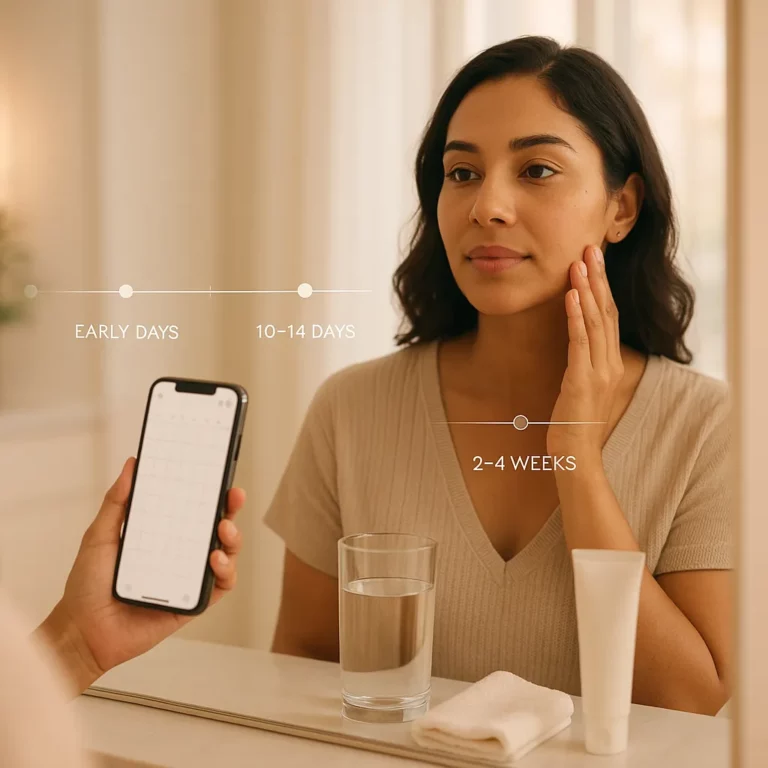
Injectables like Botox and dermal fillers can enhance your appearance by reducing wrinkles or restoring volume. But how long do results take? Here’s a quick breakdown:
Botox: Starts working in 3–5 days, with full results visible by 10–14 days. Effects last around 3–4 months.
Dermal Fillers: Swelling and settling take 1–4 weeks. Final results are typically visible by week 4 and can last 6 months or longer, depending on the product and area treated.
Aftercare: Avoid touching the area, strenuous activity, and alcohol for the first 24–48 hours to minimize swelling and bruising.
Plan treatments at least two weeks before major events to ensure optimal results. Regular follow-ups help maintain the desired look. Patience is key – results evolve over time for a natural, refreshed appearance.
When can one see the results of a filler injection? - Dr. Amee Daxini
First 24 Hours After Treatment
Initial Changes You’ll Notice
Right after your treatment, you might notice some temporary changes, but don’t worry – these are part of the process, and the final results will take a bit of time to emerge. Mild swelling and redness are common during this period, as your body reacts to the treatment. These effects are completely normal and should fade soon [3].
A little bruising may also appear, depending on your body’s healing process and the technique used during the injections. For example, one client shared:
“She has amazing technique and I hardly bruised when getting lip and chin filler.” – Np cat client, Calista Aesthetics [1].
You might also feel slight tightness or tenderness as the product begins to settle. Some describe this as a sensation of mild pressure or fullness, especially when dermal fillers are involved [4].
It’s worth noting that any swelling during the first 24 hours can temporarily distort how the results look. So, try not to overanalyze your appearance just yet – patience is key. These early reactions highlight the importance of following proper aftercare instructions to ensure the best outcome.
Side Effects and How to Care for Treated Areas
In addition to the initial changes you might see, taking care of the treated areas is crucial. Temporary side effects like mild headaches can occur [3]. If this happens, over-the-counter pain relievers may help, but always check with your provider before taking any medication.
The first 24 hours are especially important for aftercare, and sticking to your provider’s recommendations is essential for achieving the best results [8]. Here are some important tips to follow:
Hands off! Avoid touching or massaging the treated areas. This can prevent the product from moving to unintended spots and protect your final results [8].
Skip the gym and heat. Avoid strenuous exercise, hot showers, saunas, and steam rooms, as they can worsen swelling or bruising [3].
Hold off on alcohol. Avoid drinking alcohol or taking blood-thinning medications, as these can increase bruising and swelling. If you’re on any medication, discuss it with your provider before treatment.
Elevate while you sleep. Keeping your head elevated can help reduce fluid pooling in your face.
To manage swelling, applying an ice pack wrapped in a cloth for 10–15 minutes (with breaks) can be very effective [8].
Most people find that redness and swelling fade within 24 to 48 hours. However, keep in mind that the injectable product needs more time to fully settle into the targeted areas. Following these aftercare guidelines is key to reducing any complications and achieving the look you’re aiming for [8].
Staying hydrated and maintaining a healthy diet can also support your recovery. Adding post-treatment skincare – like sunscreen and a good moisturizer – can further enhance the healing process.
If you experience anything unusual or if side effects persist beyond 48 hours, it’s important to reach out to your provider for advice.
Days 2 to 7: Early Healing
When Swelling and Bruising Peak
In the first few days after your injectable treatment, you’ll notice that swelling and bruising are at their highest. Typically, swelling and bruising peak within the first 24–48 hours, and then begin to gradually subside [3][4]. This is a natural response from your body to the injections and is nothing to worry about – it’s just part of the healing process.
By day 3, you’ll likely see a noticeable reduction in both swelling and bruising [4]. The puffiness that might have been concerning on day 2 often starts to ease, and bruising begins to fade. However, how quickly this happens can vary from person to person. Factors like your skin’s sensitivity, the number of injections you received, and even the fragility of your blood vessels can all play a role in how fast you heal.
Bruising might stick around a little longer than swelling, but by the end of the first week – around day 7 – most people find that both have significantly improved [4]. At this point, you should feel more at ease returning to your normal social and professional activities without worrying about visible signs of treatment.
To help reduce swelling, try keeping your head elevated while sleeping during the first few nights. This can prevent fluid from pooling in your face, making the swelling less noticeable.
How Your Appearance Changes During Week 1
During this first week, don’t be alarmed if the treated areas appear uneven – it’s part of the process. It’s common for treated areas to look slightly uneven or overcorrected at first, but this will even out as the swelling subsides [4].
Swelling doesn’t always occur uniformly. One side of your face might look puffier than the other, or certain areas may seem more prominent. This localized swelling can temporarily give the impression of overcorrection or imbalance. If you’ve had dermal fillers, the treated areas might look fuller than expected because the product hasn’t fully integrated into your skin yet [7].
For those who’ve received Botox or other neurotoxins, you might notice that muscle relaxation happens unevenly at first [4]. By day 3, you could start to feel a slight tightness around the injection sites as the neurotoxin begins to take effect [4]. Between days 4 and 6, you’ll likely notice early signs of muscle relaxation, and some people report mild tingling or subtle changes in facial expressions during this time [4]. These are early signs that the treatment is starting to work, but the full results won’t be visible until days 10–14 [2][4].
Interestingly, about 84% of the full Botox effect is achieved between days 3 and 5 after the injection, though swelling during this time might obscure the full extent of muscle relaxation [3]. By day 7, reduced swelling reveals more natural-looking results [4]. At this point, friends or family might notice subtle changes in your appearance, but the results will still look natural [4].
It’s best to avoid judging your final results during this phase. Your appearance will continue to improve over the next few weeks as everything settles into place. By the end of week 1, you can feel confident resuming your usual routine as the initial changes become less noticeable.
Returning to Normal Activities
As the week progresses, you can gradually get back to most of your regular activities. This aligns with the natural healing process and the settling of the treatment.
If you’re wondering about makeup, you can start applying it cautiously after the first 24 hours [3]. By day 7, you’ll be able to return to your normal makeup routine without any special precautions [4]. Many people even find that their makeup applies more smoothly as the initial swelling goes down [2].
When it comes to exercise, you can resume light to moderate activities by days 3–4, but it’s best to hold off on high-intensity workouts during the first 48 hours [3][4]. By day 7, you should be able to return to your full exercise routine.
For other facial treatments, such as facials or procedures that involve pressure on your face, it’s wise to wait until day 7. At that point, you can safely enjoy these treatments without interfering with your results [4].
To support your recovery, stay hydrated and avoid alcohol for at least the first 24–48 hours, as alcohol can exacerbate swelling and bruising [4]. Additionally, try to avoid blood-thinning medications and supplements, such as aspirin, ibuprofen, and vitamin E, during this time. However, always consult your healthcare provider before stopping any prescribed medications.
Weeks 2 to 4: When Results Settle
When Fillers Reach Final Results
By the time you hit weeks 2 to 4 after getting dermal fillers, the product has fully integrated with your skin. Most fillers reveal their final appearance within 3 to 4 weeks post-treatment, though this timeline is different for neurotoxins like Botox[7]. Around week 2, you’ll likely notice more definition in the treated areas – this is especially noticeable with procedures like lip fillers. By week 3 or 4, any lingering swelling usually fades, leaving a smoother and more natural look. During this period, the fillers continue to hydrate and blend seamlessly with your skin, which explains why the initial results might look slightly different from the final settled appearance. This stage signals the shift from early healing to longer-lasting results.
Continued Improvement and Natural Appearance
By week 2, Botox typically starts softening fine lines, and by week 4, the overall skin texture improves as any swelling resolves. Botox is particularly effective in reducing crow’s feet, frown lines, and forehead creases, giving your face a smoother, more refreshed look[2]. Many patients also notice improvements in how makeup applies, as the skin appears more even. By the end of week 4, your skin adapts to its relaxed state, leading to additional benefits like smoother texture, smaller-looking pores, and reduced oiliness – especially on the forehead and nose[2]. Patients often describe this phase as seeing “a version of themselves that feels refreshed, awake, and relaxed.”[2]
When to Consider Touch-Up Appointments
As your results settle, it’s common to schedule a touch-up appointment around day 14 (the end of week 2) or sometime during weeks 3 to 4, once the full effects are visible[4]. These follow-ups allow your provider to fine-tune results and address any asymmetries. Whether it’s correcting minor irregularities or adding volume, this session is an opportunity to ensure you’re happy with the outcome. Open communication with your provider is essential during this process.
For instance, one client at Calista Aesthetics shared their experience after their first lip filler treatment:
“It has been 2 weeks since I got my first ever lip filler. I was always scared of lip filler bc I feel like it would change my whole face, but NP Christy helped create the best shape for my lips and my overall profile. I will be coming in 6 months to retouch my lips.”[1]
If by weeks 3 or 4 your results still don’t match your expectations, a consultation with your provider can help determine if further adjustments are needed.
Botox and Neurotoxin Results Timeline
When You’ll Start Seeing Results
Unlike dermal fillers that provide instant volume, neurotoxins like Botox work gradually. Most people start to notice subtle changes around days 3 to 5 after their treatment [9]. If you don’t see any difference on day 2, don’t worry – it’s working behind the scenes.
By days 7 to 10, more noticeable improvements typically appear, and the full effects are usually visible by day 14 [2][4]. However, timelines can vary, especially for first-time patients who might notice changes a bit later [5]. This steady progression is one reason why Botox results often look so natural.
How Neurotoxins Take Effect
Botox works by blocking nerve signals to specific facial muscles, which gradually reduces dynamic wrinkles. During the first couple of days (days 2–3), the treatment is active but not yet visible. By days 4 to 7, you might start seeing early signs of smoother wrinkles and less muscle activity. Around days 10 to 14, the treatment reaches its peak effect: wrinkles soften significantly during expressions, and muscle movement is reduced without feeling overly stiff. Many people describe this as looking like a refreshed version of themselves, with lines appearing much less noticeable [2].
Different areas of the face respond at slightly different rates. For example:
Crow’s feet and bunny lines often improve within 3 to 5 days.
Forehead lines usually respond by days 4 to 6.
Frown lines (glabella) might take 5 to 7 days to show changes [9].
These differences are mainly due to variations in muscle thickness and strength across the face.
Temporary Unevenness During Settling
As your results develop, it’s normal to experience some temporary unevenness. Facial muscles respond at different rates, so one area might smooth out faster than another. For instance, you might notice one side of your forehead looks smoother than the other a few days after treatment – this is a common part of the process.
If you have stronger or asymmetrical muscle patterns, minor unevenness may be more noticeable early on. This is one reason why a follow-up appointment around the two-week mark is helpful. During this visit, any small adjustments can be made to ensure balanced, natural-looking results.
Taking photos before your treatment and comparing them with pictures from days 7, 14, and beyond can help you track your progress. This approach can also set realistic expectations and give you a clear picture of how your results are unfolding.
How Long Results Last and Maintenance
Expected Duration by Treatment Type
Once you’ve reached the final results of your treatment, it’s important to know how long those results will last and what kind of maintenance is needed. For Botox and other neurotoxin treatments, the effects typically last 3 to 4 months. However, this can vary: about 25% of clients experience results lasting over 4 months, while another 25% may notice effects fading in under 3 months. Results tend to diminish gradually over several weeks [9][10]. Around the 3-month mark, you might notice an increased range of motion in the treated muscles. Initially, expression lines reappear during strong facial movements, and later they may become noticeable even when your face is at rest [9]. This gradual fading gives you plenty of time to plan your next session.
Dermal fillers, on the other hand, follow a different timeline. Most fillers fully integrate into your skin around 4 weeks after treatment as they bind with water and settle into the tissues [7][11]. The duration of results can also vary depending on the area treated. For example, improvements in frown lines (glabellar lines) and crow’s feet typically last 3 to 4 months. Factors like muscle size and strength can influence how long the effects last [9].
What Affects How Long Results Last
Several factors determine how long your results will last, including your metabolism, muscle strength, and lifestyle. For some, results may last less than 3 months, while others see effects extending beyond 4 months [9]. Regular treatments can help relax the muscles further over time, potentially prolonging the effects. In fact, after three years of consistent Botox sessions, some patients report that their results last 4 to 5 months, compared to the 10 to 12 weeks they experienced initially [9][10].
Muscle strength and size also play a role. Areas with larger, stronger muscles tend to metabolize the neurotoxin faster, which can shorten the duration of results. Lifestyle factors, such as stress or physical activity, may also influence how long the effects last [9]. Following your provider’s aftercare instructions is crucial for maintaining your results [4]. Over time, as the body metabolizes the neurotoxin and nerve endings reconnect, the treatment effects naturally diminish [9]. This highlights the importance of scheduling timely follow-up appointments to keep your results looking their best.
Planning Follow-Up Appointments
To ensure optimal results, plan a follow-up appointment about 10 to 14 days after your treatment for any minor adjustments. For Botox, it’s a good idea to schedule your next session around the 3-month mark to maintain smooth and consistent results [4][10]. Roughly 5% to 10% of first-time clients may need small touch-ups during this period, especially if they have particularly strong or uneven muscle activity [9].
For dermal fillers, allow about 4 weeks for the product to fully integrate into your skin. After that, touch-ups are typically planned around 6 months, especially for areas like the lips [11]. For instance, clients who receive lip fillers often return for a touch-up at the 6-month mark [1].
The key to maintaining your look is monitoring for the gradual reappearance of dynamic wrinkles, such as crow’s feet or laugh lines. Scheduling touch-ups during the plateau phase – usually between 3 and 4 months – rather than waiting for wrinkles to fully return can help preserve a smooth and refreshed appearance. Consistent follow-ups not only keep your results intact but also align with the natural progression of your treatments, ensuring you stay ahead of any noticeable changes.
Tips for Setting Realistic Expectations
Don’t Analyze Daily Changes
One of the most common pitfalls after getting injectables is obsessively checking the mirror every day. Changes from treatments like Botox and fillers take time – Botox typically shows its full effect by day 14, while fillers can take up to four weeks to settle, depending on the area treated [2][4][5]. Daily scrutiny can actually make you more anxious, as subtle, normal variations might seem exaggerated. Even differences in lighting can make the natural settling process appear inconsistent.
By day five, you might feel disappointed if the results seem minimal, not realizing that the peak effects are still days away. This impatience can spark unnecessary anxiety or even requests for early adjustments, which could interfere with the natural process. Instead of focusing on daily changes, step back and give your treatment the time it needs. Keep in mind that minor asymmetry is normal during the first couple of weeks – different facial muscles relax at different rates, and swelling resolves unevenly [2][12]. Look at the bigger picture and let the process unfold naturally.
Take Photos to Track Your Progress
Using photos to document your progress can be a game-changer. Start with a baseline photo, then take new ones at weekly intervals [2][4]. This method helps you see the gradual improvements that are easy to miss during daily checks.
For the best results, keep your photos consistent. Use natural daylight whenever possible, and take them from the same angles and at similar times of day. When you compare pictures taken weeks apart, you’ll notice how lines have softened, swelling has reduced, and your results have matured. Many patients are pleasantly surprised when they look back at their “before” photos and see just how much has changed – details they may have overlooked in the moment. These photos are also a helpful resource for future treatments, allowing you to discuss what worked well, what you’d like adjusted, and even additional benefits like improved skin texture and tone [2]. Armed with this objective documentation, you can have more productive conversations with your provider.
Stay in Touch with Your Provider
As your results develop, staying connected with your provider is key to ensuring the best outcome. At Calista Aesthetics, they emphasize transparency and honest communication to make sure you feel confident throughout the process [1].
“We value gaining your trust through transparency, honesty, and open communication so that you are comfortable and confident every step of the way.” – Calista Aesthetics [1]
If you experience severe reactions or have persistent concerns, reach out to your provider immediately. Otherwise, plan a follow-up appointment around day 14, when the full effects of your treatment are visible [2][4][12]. This is the ideal time to evaluate your results and discuss any adjustments. Calling too soon could lead to unnecessary modifications that might disrupt the natural settling process.
The team at Calista Aesthetics is known for their honest and approachable care:
“She is very approachable and knowledgeable and I love that she will tell you exactly what you need and don’t need.” – Client Review about NP Cat [1]
“She is very honest and kind with her advice when trying something new.” – Client Review about NP Christy [1]
Your timeline will depend on personal factors like metabolism, age, muscle strength, and lifestyle [5][6]. While some patients notice initial results within three days, others may take up to five days, with full effects appearing between day 10 and day 14. Since everyone’s experience is unique, comparing your progress to someone else’s isn’t helpful. Discussing your individual factors with your provider can give you a clearer understanding of your expected timeline and maintenance schedule, which might differ from the typical 3–4 month duration [5].
The follow-up support at Calista Aesthetics ensures you’re never left guessing whether your results are on track. Knowing you can reach out with questions provides peace of mind, and understanding the typical timeline helps you avoid unnecessary worry about changes that are simply part of the process.
FAQs
The duration of results from Botox and dermal fillers depends on a variety of factors, such as the specific product used, the area treated, your body’s metabolism, and how well you care for your skin post-treatment. Botox results typically last about 3 to 4 months, while dermal fillers can last anywhere from 6 months up to 2 years, depending on the type and formulation of the filler.
To help extend your results, it’s essential to follow your provider’s aftercare guidance, stay well-hydrated, protect your skin from sun exposure, and schedule touch-up sessions when needed. At Calista Aesthetics, treatments are designed to align with your personal goals, delivering natural-looking, balanced results that enhance your overall appearance.
Before getting an injectable treatment, it’s important to book a consultation with your provider. This is your chance to talk about your goals and share your medical history, which helps them create a plan that’s customized just for you. To reduce the risk of side effects, steer clear of blood-thinning medications like aspirin or ibuprofen, as well as alcohol, for 24–48 hours before your appointment. Staying hydrated and keeping up with a good skincare routine can also make a difference in your results. If you have any specific concerns or questions, your provider will be able to guide you on how to get ready for the procedure.
If you notice any unexpected side effects or feel unsatisfied with your results, it’s important to reach out to your provider right away. Clear and honest communication helps address concerns and ensures your treatment stays in line with your goals.
At Calista Aesthetics, your safety and satisfaction are our top priorities. Our team is here to provide expert care designed specifically for you. If you need guidance or adjustments, don’t hesitate to get in touch – we’re here to help.