

8 Ways Microneedling Transforms Skin Texture
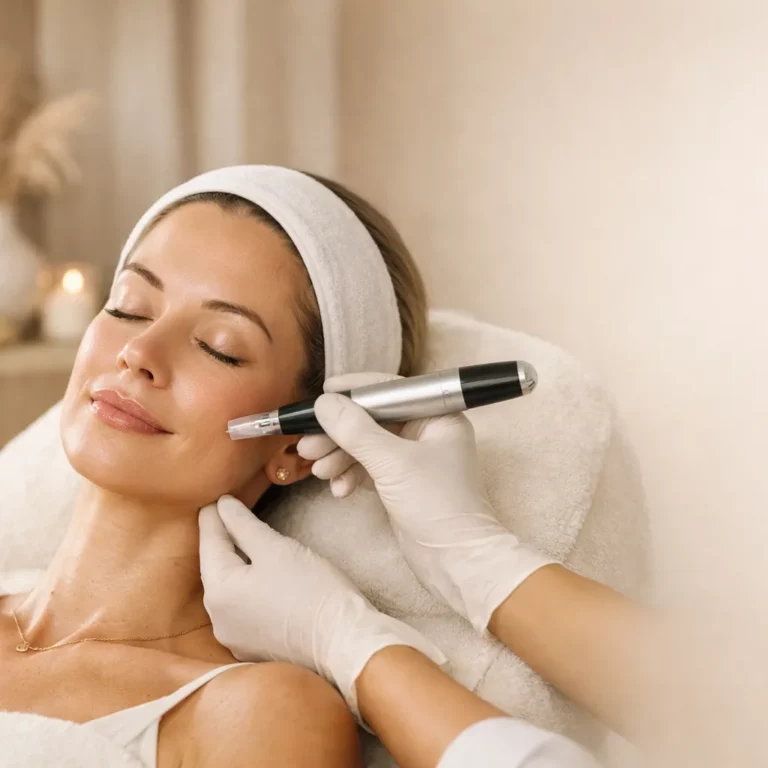
Microneedling is a skin treatment that uses tiny needles to trigger collagen production, improving skin texture over time. It addresses concerns like acne scars, wrinkles, enlarged pores, and uneven skin tone. Here’s a quick breakdown of how it works and its benefits:
Boosts Collagen: Promotes smoother, firmer skin by increasing collagen and elastin levels.
Minimizes Pores: Tightens skin around pores, making them appear smaller.
Reduces Scars: Softens acne and textural scars by stimulating new collagen.
Smooths Wrinkles: Targets fine lines by plumping skin from within.
Evens Skin Tone: Improves discoloration and rough patches through cell turnover.
Enhances Product Absorption: Increases penetration of skincare products for better results.
Firms Skin: Addresses mild sagging and improves elasticity.
Long-Term Results: Collagen production continues for months, with effects lasting up to 7 years.
Professional treatments penetrate deeper than at-home devices, offering noticeable, lasting improvements with minimal downtime. Sessions are typically spaced 4–6 weeks apart, with results becoming more visible over time. For best results, combine microneedling with PRP or serums to enhance healing and skin repair.
MICRONEEDLING OVER 50: Does It Really Work for Wrinkles, Scars, and Skin Texture?
1. Stimulates Collagen for Smoother Skin
When those tiny needles glide across your skin, they set off a biological chain reaction that wakes up fibroblasts – cells responsible for producing collagen and elastin. This process happens in carefully timed healing phases.
First, there’s the inflammation phase, which lasts from 0 to 3 days. During this time, white blood cells and growth factors like PDGF and FGF jump into action. Next comes the proliferation phase, spanning 2 to 8 weeks, where fibroblasts get busy creating fresh collagen and elastin. Finally, in the maturation phase (which can last 8 weeks to over a year), the collagen transitions from Type III to the more robust Type I [7].
Studies have revealed some impressive results: histological exams show a 400% boost in collagen and elastin production just six months after completing four microneedling sessions. Even better, this newly formed collagen can stick around in your skin for 5 to 7 years [7]. Within just five days of treatment, a fibronectin matrix develops, directing collagen deposition to help your skin appear smoother and firmer [7].
“The damage helps stimulate your skin’s healing process, so it produces more collagen and elastin. These proteins keep your skin firm and smooth.” – Cleveland Clinic [5]
For general skin rejuvenation or addressing fine lines, practitioners often use needle lengths between 0.5 mm and 1.0 mm. For deeper concerns, like scars, longer needles ranging from 1.5 mm to 2.0 mm are typically required [7]. While the effects aren’t instant, the process of neocollagenesis continues for 3 to 6 months after treatment. During this time, your skin gradually becomes smoother and more resilient as the newly formed collagen and elastin fibers mature [7]. This gradual transformation highlights how microneedling delivers long-lasting improvements in skin texture.
2. Reduces Enlarged Pores
Microneedling works by creating tiny, controlled micro-injuries in the skin, which activate the body’s natural healing process. This stimulates collagen and elastin production, helping to restructure the tissue around pores. As a result, the skin tightens, and pores appear smaller. Essentially, the dermis becomes firmer and denser, which pulls the skin taut around each pore opening. Clinical studies back this up, showing measurable reductions in pore size.
“Did the pores actually change in size? No, but by creating tighter skin, pores can return to their more confined normal space!” – Dr. Rebecca Fitzgerald, Board-Certified Dermatologist [11]
One notable study conducted by Dr. Kyu-Ho Yi and Jovian Wan at Medical Research Inc. in Korea followed 15 patients with visibly enlarged facial pores. After undergoing three microneedling sessions paired with a poly-d,l-lactic acid formulation (Juvelook), the participants saw their pore size scores drop from an average of 6 (very large) to 3 (moderately sized) over 12 weeks. These results were sustained through a 22-week follow-up period [13].
Typically, noticeable skin tightening occurs gradually after 4 to 6 sessions, spaced 4 to 6 weeks apart. Interestingly, microneedling temporarily widens the follicular infundibulum by 47%, which improves the absorption of topical treatments before the skin firms up [7][10][14].
To maximize results, start using vitamin A and C products at least a month before your first session to enhance collagen production [9]. After treatment, daily sunscreen and non-comedogenic moisturizers are essential to protect the newly formed collagen and maintain the refined appearance of your pores [10][12].
3. Fades Acne Scars and Textural Scars
Microneedling works by creating thousands of tiny punctures in the skin, disrupting old, rigid scar tissue. This process triggers the skin’s natural healing response, leading to the development of a new, well-organized collagen and elastin structure.
Experts back this approach:
“Microneedling breaks down scar tissue and encourages new collagen to fill in these depressions. Over time, this process smooths the skin’s surface and reduces the appearance of scars.” – Dr. Brett Matheson or Dr. Christopher Sartori, Skin Cancer & Dermatology Center [16]
For atrophic scars – those pitted or sunken areas – microneedling stimulates collagen production that gradually fills in these depressions, smoothing the skin from the inside out. With a typical treatment plan, scar visibility can decrease by 50% to 70% [4][15]. Professional devices used in microneedling can penetrate to depths of 0.5 mm to 2.0 mm, effectively targeting even deep scars [3].
Most individuals notice significant changes after 3 to 6 sessions, spaced 2 to 6 weeks apart. Full results typically become apparent within 3 to 6 months [4][15][3]. For more severe scars, combining microneedling with treatments like Platelet-Rich Plasma or radiofrequency can further enhance collagen production and skin repair.
However, microneedling isn’t suitable for everyone. Those with a history of keloid scars or active inflammatory acne should avoid the procedure, as it could worsen these conditions. Unlike many laser treatments, microneedling doesn’t rely on heat, making it a safer option for individuals with darker skin tones who are more prone to post-inflammatory hyperpigmentation [3][5].
4. Reduces Fine Lines and Early Wrinkles
Microneedling works wonders on fine lines and early wrinkles by stimulating collagen and elastin production deep within the skin. How does it work? Tiny needles create controlled micro-injuries in the dermis, prompting fibroblasts to kickstart a natural repair process. This repair boosts collagen levels, which helps plump up fine lines and smooth out wrinkles.
This treatment is particularly effective for areas prone to constant movement, such as forehead lines, crow’s feet, nasolabial folds, and lip lines [17][18]. Dr. Levy from Dermatology of Seattle & Bellevue explains:
“By boosting collagen levels, microneedling softens the appearance of fine lines and wrinkles. Over time, treated areas look plumper and firmer, with noticeable improvements in elasticity.” [17]
Research supports this, showing significant increases in collagen production that continue for months after treatment. Many patients see visible improvements after 3 to 6 sessions, spaced about 4 to 6 weeks apart [7][17].
Microneedling doesn’t just rely on the body’s natural healing process. The micro-channels created during the procedure also enhance the absorption of anti-aging serums, such as Vitamin C or hyaluronic acid. These serums penetrate deeper into the skin, amplifying their wrinkle-reducing effects [17][19]. As Matthew Bridges, MD, highlights:
“Adequate collagen makes our pores less noticeable, wrinkles and lines less deep, and our skin tighter and texture smoother.” [19]
For fine lines, needle depths typically range from 0.5 mm to 1.0 mm – perfect for delicate areas like around the eyes, while still deep enough to encourage meaningful collagen remodeling [7]. After treatment, it’s crucial to protect your skin with a broad-spectrum SPF to guard against sun damage [17][18].
5. Evens Out Skin Tone and Texture
Microneedling is a powerful way to address uneven skin tone and rough patches by kickstarting your skin’s natural repair process. When the tiny needles create controlled micro-injuries, your skin responds by speeding up cell turnover. This helps remove damaged, pigmented cells, leaving behind a smoother, more even complexion. It also works to break apart melanin clusters that cause dark spots, sun damage, and conditions like melasma.
One of the standout benefits of microneedling is its safety across all skin tones. Unlike heat-based treatments, microneedling doesn’t rely on heat, making it a safer option for individuals with darker skin tones who are more prone to post-inflammatory hyperpigmentation. In fact, a study on facial melasma showed participants experienced a 44% improvement when microneedling was used as part of their treatment plan [4].
Microneedling doesn’t just address discoloration – it also improves your skin’s texture. By stimulating collagen production around pore walls and filling in areas of unevenness, it helps refine the skin’s surface. Dr. Tito Vasquez, a plastic surgeon at Yale Medicine, explains:
“By creating tiny channels through the skin, allowing us to infuse serums and active ingredients more efficiently, this treatment will stimulate collagen production and improve skin texture and tone.” [3]
These micro-channels also enhance the absorption of brightening serums, amplifying the treatment’s results.
For the best outcomes in evening out your skin tone and texture, aim for 3 to 6 sessions spaced 4 to 6 weeks apart. You’ll notice initial brightness within days, but the full benefits unfold over the next two years [1]. After each treatment, make sunscreen your best friend – apply a high SPF (30 or higher) daily to protect your renewed skin and prevent new pigmentation from forming.
6. Improves Product Absorption
Microneedling works by creating tiny channels in the skin, bypassing the outermost layer (the stratum corneum) and allowing active ingredients to dive deeper into the dermis, where repair and regeneration take place. These tiny punctures, often called “micro-conduits”, enable skincare products to penetrate areas they normally wouldn’t reach, leading to noticeable improvements in how well these products are absorbed.
For example, using a standard 192-needle device rolled 15 times can create approximately 250 micro-holes per square centimeter [23]. These micro-holes stay open for a short period – ranging from minutes to hours – giving the skin a unique opportunity to absorb ingredients that would otherwise be blocked, such as large, water-soluble molecules like peptides and growth factors.
“The micropores created by MN increase skin permeability, allowing hydrophilic water-soluble molecules to transfer across the skin to enhance transdermal drug delivery and absorption.” – Lily Tehrani, Nova Southeastern University [21]
Research has shown that combining microneedling with depigmentation serums for melasma treatment significantly boosts results. Patients experienced an improvement of 9.9 points in their MASI scores, compared to just 7.1 points when using the serum alone [20].
To maximize these benefits, apply medical-grade serums – like those containing hyaluronic acid, growth factors, or Vitamin B5 – immediately after treatment. However, steer clear of harsh ingredients like Vitamin C or retinoids for at least 18 hours to protect the skin’s compromised barrier [22]. This enhanced absorption doesn’t just make products more effective; it also helps improve skin texture by promoting collagen production and reinforcing the skin barrier from within.
7. Firms Skin and Addresses Mild Sagging
Microneedling tackles mild skin laxity by kickstarting your body’s natural healing process. The procedure works by creating tiny, controlled micro-injuries in the skin. These micro-injuries trigger the release of growth factors like platelet-derived growth factor (PDGF) and transforming growth factor (TGF), which set the stage for tissue repair and remodeling. About five days after the treatment, a fibronectin matrix forms, encouraging fibroblasts to get to work producing fresh collagen and elastin. These proteins are key players in restoring your skin’s structure and elasticity, leaving it firmer and more resilient.
At first, your skin generates Type III collagen, which is softer and temporary. Over the next several months, this collagen gradually matures into Type I collagen, known for its strength and durability. This transformation significantly enhances skin density and reinforces its structural integrity. Studies have shown that collagen deposition continues to increase for up to six months after treatment, leading to visible improvements in firmness and texture [7][9].
“By creating tiny channels through the skin… this treatment will stimulate collagen production and improve skin texture and tone.” – Tito Vasquez, MD, Plastic Surgeon, Yale Medicine [8]
Microneedling doesn’t just improve the deeper layers of the skin – it also thickens the epidermis, the outermost layer that tends to thin with age. This added thickness helps address issues like crepey skin and mild sagging, particularly in areas like the cheeks, jawline, and neck. For instance, patients undergoing fractional radiofrequency microneedling have reported an average 30% reduction in fine lines and wrinkles in the lower face and neck after four months [21]. The increased epidermal density provides both immediate and long-lasting support.
Even better, the collagen generated through microneedling can last for 5 to 7 years before it naturally breaks down, delivering long-term benefits. To achieve the best results for mild sagging, experts recommend a series of 3 to 6 treatments, spaced 3 to 8 weeks apart. The full tightening effects typically become noticeable within 3 to 6 months. At Calista Aesthetics, our skilled team customizes microneedling treatments to help you achieve smooth, firm, and naturally youthful skin that lasts.
8. Provides Long-Term Texture Improvement
The effects of microneedling keep building long after your session ends. Collagen production continues for 3 to 6 months, and the process of skin maturation can stretch out for up to 2 years[1][7]. This means your skin keeps improving well beyond the initial treatment.
“Final results cannot be viewed immediately as neocollagenesis continues for approximately 3 to 6 months following the treatment.” – StatPearls[7]
Clinical studies back this up, showing that the new collagen fibers formed during treatment can last for 5 to 7 years[7][21].
To achieve these long-lasting improvements, most people need 3 to 6 sessions, spaced about 4 to 6 weeks apart[25]. For more stubborn concerns, like deep acne scars, additional sessions – around 6 to 8 treatments – might be necessary[24]. Annual maintenance treatments can help preserve these results as your skin naturally ages[5].
At Calista Aesthetics, treatment plans are tailored to your specific skin texture concerns and goals. This personalized approach ensures you fully benefit from microneedling’s ability to deliver lasting, visible improvements.
Comparison Table: Microneedling Texture Benefits
Here’s a quick breakdown of how microneedling helps with different skin texture concerns. The table covers session requirements, recovery times, and expected improvements, making it easier to understand what kind of results you can anticipate.
Texture Issue | Sessions Needed | Recovery Time | Improvement Level |
|---|---|---|---|
Acne Scars | 4–6 sessions [4] | 5–7 days [25] | 50–70% reduction in scar visibility [4] |
Fine Lines & Wrinkles | 3–6 sessions [25] | 5–7 days [25] | Noticeable smoothing; up to 400% collagen boost [7] |
Enlarged Pores | 3–6 sessions [25] | 5–7 days [25] | Pores appear smaller due to firmer skin [2] |
Pigmentation/Melasma | 3–6 sessions [25] | 5–7 days [25] | Around 44% improvement in skin tone uniformity [4] |
Stretch Marks | 3–6 sessions [25] | 5–7 days [25] | Smoother texture and better pigmentation [4] |
Microneedling sessions are spaced about 4–6 weeks apart, giving your skin enough time to heal and regenerate [25][5]. Recovery is fairly predictable: expect 24–48 hours of redness and swelling, followed by light peeling between days 3 and 5 [25]. Most people resume their regular activities within a week.
This table highlights how microneedling, when done at Calista Aesthetics, can address your specific skin texture concerns effectively and with minimal downtime.
Microneedling works through a three-phase healing process – inflammation, proliferation, and remodeling – that naturally stimulates collagen and elastin production [21]. Research highlights a striking 400% increase in these proteins just six months after four sessions, with results that can last anywhere from 5 to 7 years [7][21].
This process doesn’t just refresh the skin – it builds on itself over time. With 3 to 6 treatments spaced 4 to 6 weeks apart, you can see noticeable improvements in acne scars, enlarged pores, fine lines, and overall skin tone. In fact, microneedling has been shown to reduce the appearance of scars by as much as 70% while also enhancing the skin’s ability to absorb products [2][4][6][5][7].
At Calista Aesthetics, we customize microneedling treatments to address your specific skin concerns. By adjusting needle depths, we can effectively target everything from surface irregularities to deeper scars. Book a consultation today to explore how microneedling can work for you, and maintain your glowing results with periodic treatments every 6 to 12 months. With expert care and consistency, microneedling can transform your skin’s texture and leave you with a radiant, long-lasting complexion.
FAQs
Microneedling works by creating tiny, controlled micro-channels in the skin, temporarily bypassing the outermost layer (the stratum corneum). These micro-channels allow serums and other topical products to sink deeper into the skin, enhancing their effectiveness.
This improved absorption means active ingredients can better hydrate, nourish, and refresh the skin, delivering noticeable results more efficiently.
Yes, microneedling can work in tandem with other treatments to enhance its effects. The tiny channels created during the procedure allow topical products to penetrate more deeply, making ingredients like hyaluronic acid, vitamin C, and peptides especially effective. These serums can help boost hydration, refine skin texture, and support collagen production.
A well-known pairing is microneedling with platelet-rich fibrin (PRF), often called a “vampire facial.” PRF delivers concentrated growth factors, fibrin, and plasma rich in stem cells directly into the skin. This combination speeds up healing and stimulates collagen production, leaving the skin looking smoother and more radiant.
At Calista Aesthetics, microneedling is frequently combined with these cutting-edge treatments to maximize hydration, promote quicker recovery, and achieve a noticeable improvement in skin texture and overall glow.
To make the most of your microneedling session at Calista Aesthetics, preparing your skin is essential. Start by ensuring your skin is free from any active concerns such as cold sores, acne, or irritation. If you notice any of these issues, it’s best to reschedule your appointment. Additionally, avoid direct sun exposure for at least 24 hours before your session. If you do need to be outside, apply a high-SPF sunscreen to protect your skin.
In the week leading up to your appointment, steer clear of harsh treatments like chemical peels or laser resurfacing. For the 48 hours before your session, avoid using products containing retinoids or exfoliants. During this time, stick to gentle cleansing and leave your skin bare. Staying hydrated is also important – drink plenty of water and use a light, fragrance-free moisturizer the night before to keep your skin soft and ready.
Calista Aesthetics may provide additional tailored instructions, so be sure to follow their advice for the best results and a smooth recovery process.