PRF Gel Under Eyes in Santa Ana: A Calista Case Study and What to Expect
Read the guide

In this guide
A PRF gel under-eye comparison can help you explain what catches your attention: the transition beneath the eyes, a shadow, or an overall refreshed appearance. Its most useful role is to start a conversation about your own concerns and the treatment being considered.
Calista’s October 13 Instagram post shows a stacked under-eye comparison labeled “PRF GEL.” Its caption describes a refreshed, brighter appearance and natural-looking volume and skin-quality goals. These are the post’s descriptions, rather than measurements of the result. A brighter-looking photograph alone cannot answer whether the same approach would suit your under-eyes.
Here is how to read this particular comparison, why the gel preparation matters, and which questions to bring to a Santa Ana consultation.
This PRF Gel case is from Joanne Lim, RN, the Calista injector whose Instagram portfolio is @doseofjoanne. It is presented as one composition containing two close views of the under-eye area. The PRF Gel label identifies the treatment in the source. The caption’s emphasis is on a refreshed appearance and subtle-looking support; it does not provide a numerical improvement score.
The comparison gives you a specific visual reference to discuss. You might be drawn to the appearance of the area directly beneath the lower eyelid, or to how that area meets the cheek. At a consultation, point to what interests you and describe what you notice in your own face. Your clinician can then explain whether those are comparable concerns.
A photograph does not tell us how the person felt about treatment. We are not adding a patient quote or satisfaction score to this case, and the caption’s aesthetic goals should not be read as a guarantee. The value of the comparison is that it makes a consultation question more concrete: “Could a gel treatment address the particular concern I see?”
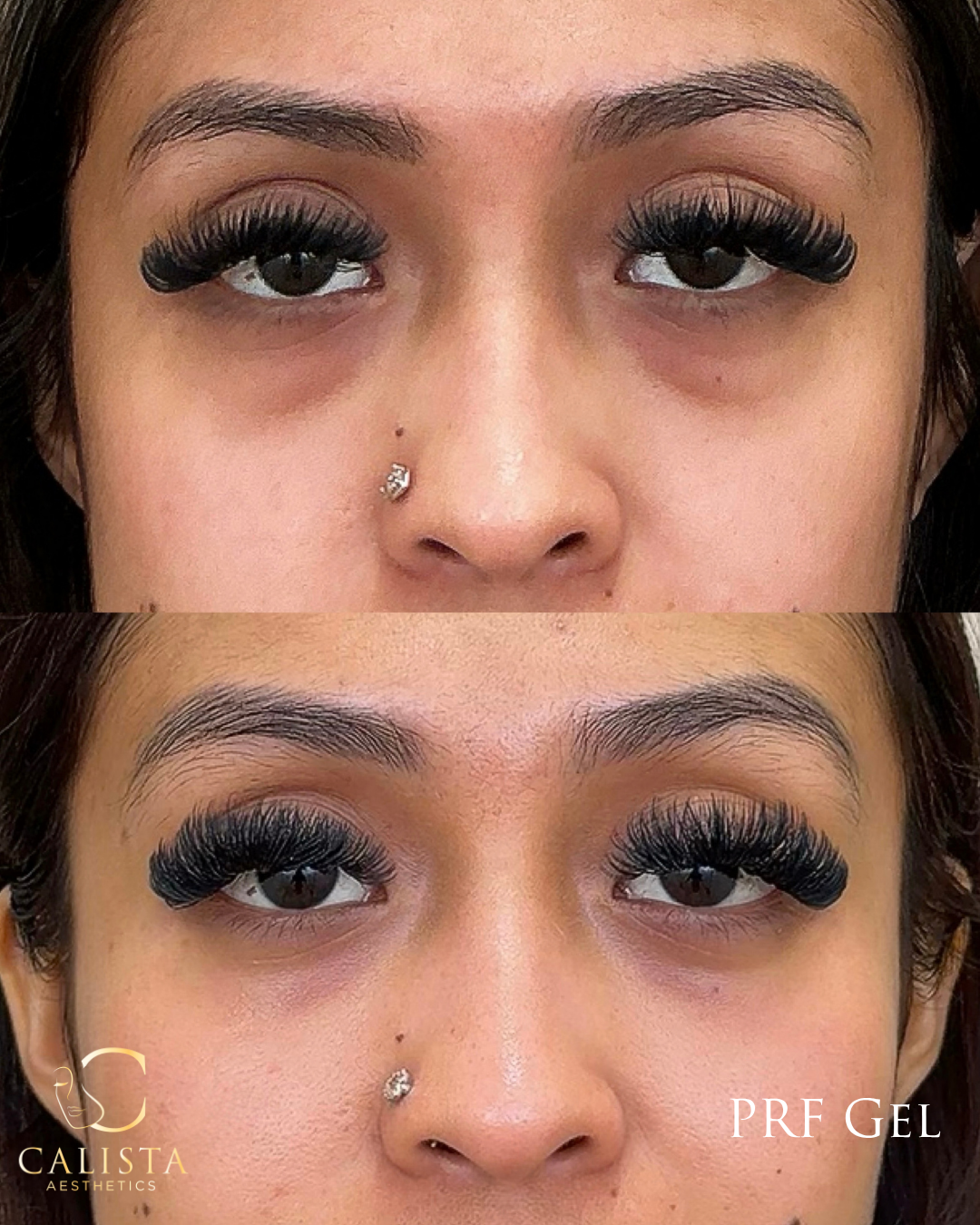
Start with what the photograph actually shows, then separate that from what you hope treatment might do. A close crop can draw attention to a small area. It does not show the entire face, every angle or how the area looks in motion. Those additional perspectives may be useful when discussing your own goal.
Ask how the comparison was photographed. Look for comparable lighting, camera angle, expression and makeup, and ask whether any image changes have been disclosed. These are questions about fair interpretation, not an allegation that a particular photograph was altered. They help keep the discussion focused on the appearance you want assessed.
The caption’s brighter-looking description should remain separate from a diagnosis. The photograph does not establish that pigment changed, skin became thicker or collagen increased. It also cannot isolate the contribution of one treatment from any other changes in a person’s care. A visible difference and an explanation for that difference are separate pieces of evidence.
One person’s comparison can illustrate an individual treatment experience. It cannot provide your probability of improvement or promise an equivalent result. Use it to make your questions more specific: “Is the concern I see in my own under-eyes similar to the concern discussed here?” is more useful than asking to reproduce the second image.
The “PRF GEL” label is a starting point, not a complete product description. Ask what preparation your clinician recommends and how it relates to the treatment you have seen. Calista’s PRF EZ Gel service page describes its offered treatment; this case uses the PRF Gel wording from the source rather than adding an unverified proprietary name or formulation.
Published research also needs careful reading. A 2023 experimental study of platelet-rich fibrin matrix assessed periorbital wrinkles at twelve weeks. It does not establish an outcome for this Calista case. A separate 2020 study compared platelet-poor plasma gel with platelet-rich plasma; neither treatment name is interchangeable with the label on this photograph.
That distinction matters when you read claims about results or recovery online. A study can be relevant background while still examining something different from the treatment being offered to you. Ask which evidence applies to the proposed preparation and what remains uncertain. A product name, a research acronym and a photograph should not be treated as three ways of proving the same thing.
For broader background, Calista’s guide to how PRF EZ Gel works covers the general appointment. This article focuses on interpreting an under-eye comparison and planning an assessment.
Bring your concern in your own words. You might notice a hollow, a dark-looking area, texture or puffiness; you do not need to decide what causes it before the appointment. Ask your clinician to explain what they see and which part of your concern a proposed treatment is intended to address. Do not use this photograph to diagnose yourself or the pictured person.
Calista’s service information says consultation includes an assessment of candidacy and acknowledges that some under-eye concerns may need a different approach, including a surgical opinion. The discussion should include deferring treatment when the expected benefit does not fit your goal. See Calista’s current service information.
A useful plan separates the desired appearance from the proposed intervention. Ask what would count as a worthwhile change for you, how it would be assessed, and what the treatment is unlikely to change. That gives you a way to judge follow-up photographs without relying only on a vague impression of looking more refreshed.
Before deciding, ask about the possible short-term effects of the proposed treatment and how they could affect work or social plans. Ask separately when your clinician intends to evaluate the result. Being ready to return to an activity does not automatically mean it is time to judge the outcome.
The word “natural” does not replace a risk discussion. Ask about swelling, bruising, tenderness, other complications and what would make the proposed treatment unsuitable for you. Your clinician should explain the risks of the actual preparation and procedure, rather than relying on a photograph or a general description of blood-derived treatments.
For context, the FDA’s dermal-filler consumer guidance describes both common effects, including swelling and bruising, and serious complications involving blood vessels. That guidance concerns dermal fillers; it does not establish regulatory approval or the risk profile of the PRF Gel treatment in this case. Ask your provider to explain the relevant distinctions and their plan for managing complications.
Use Calista’s PRF EZ Gel aftercare guide when your treating clinician confirms it is the appropriate handout. Before treatment, make sure you understand the instructions, who to contact with concerns, and which symptoms require urgent attention. Discuss any medication questions with your treating and prescribing clinicians; this article does not supply a replacement medication plan.
Follow-up should have a purpose beyond taking another photograph. Ask how you and your clinician will assess change, what would prompt reassessment, and how that assessment would guide any further visits. A selected comparison cannot establish how long a result will last for you.
Use the current PRF EZ Gel service page for Calista’s pricing and consultation information. Ask which areas and visits your proposed quote includes, whether follow-up is included, and how the plan might change after reassessment. A general service price cannot tell you what this pictured case cost or what your own plan will cost.
Bring the comparison if it helps you explain your interest. These questions can make the discussion concrete:
Calista Aesthetics is at 201 Sandpointe Ave, Suite 135, Santa Ana, CA 92707, in South Coast Metro. You can review the treatment and consultation information before planning a visit. Bring a description of your concern and your questions; the assessment should determine whether a gel treatment belongs in your plan.