How Long Does Chin Filler Last? Results and Maintenance Explained
Read the guide

In this guide
Updated
Some hyaluronic acid chin fillers have evidence of improved chin appearance for up to about one year. That is a product-specific expectation, not a promise about your result. FDA patient labeling for Restylane Defyne, Juvéderm Voluma XC, and Restylane Lyft with Lidocaine describes chin benefits lasting up to 12 months; individual results vary. Defyne patient information, Voluma XC chin patient information, Lyft patient information.
The useful question is how a particular product’s evidence relates to your chin, goals, and treatment plan. Below, we explain what those duration claims mean, how reassessment differs from automatic maintenance, and what to discuss before treatment.
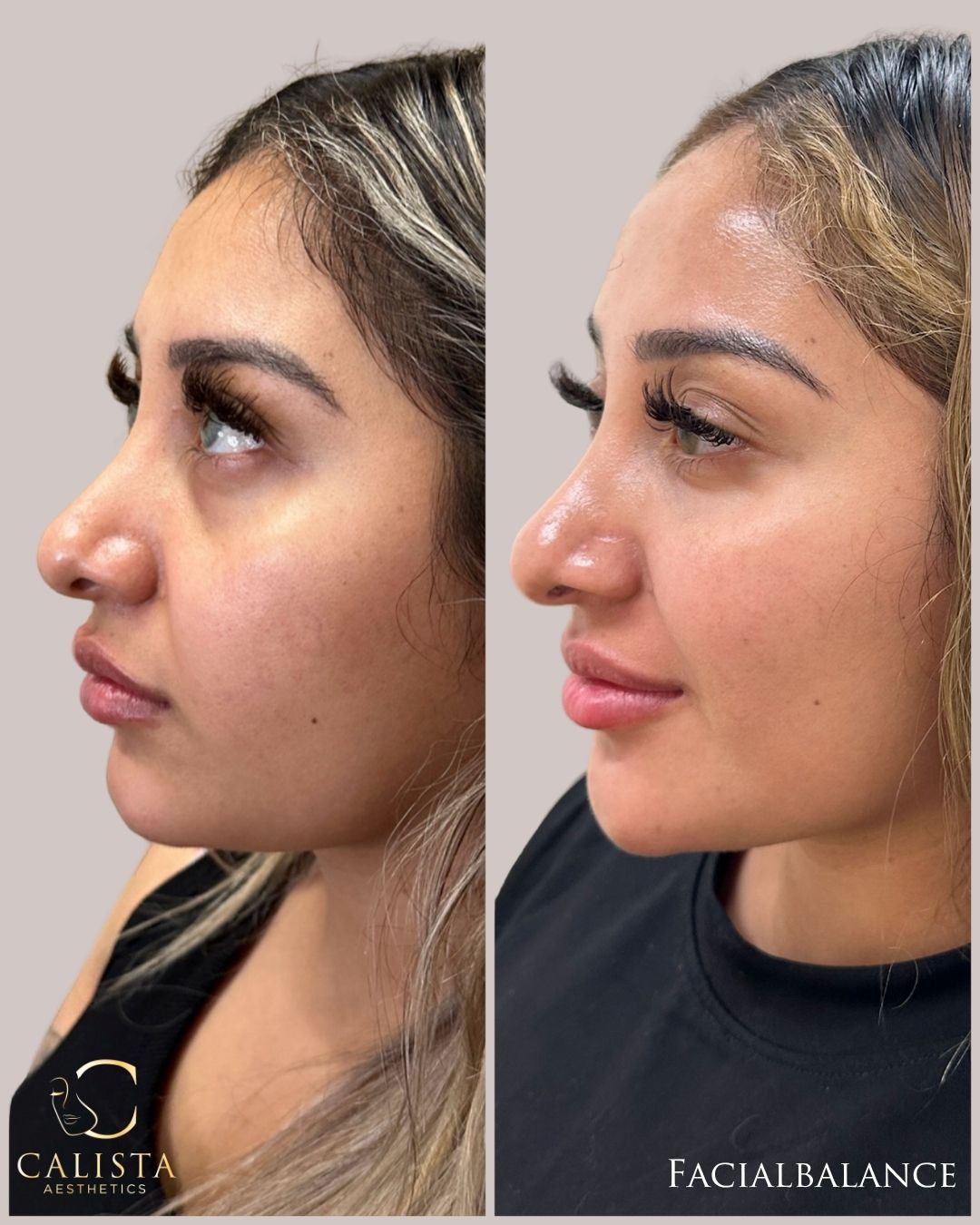
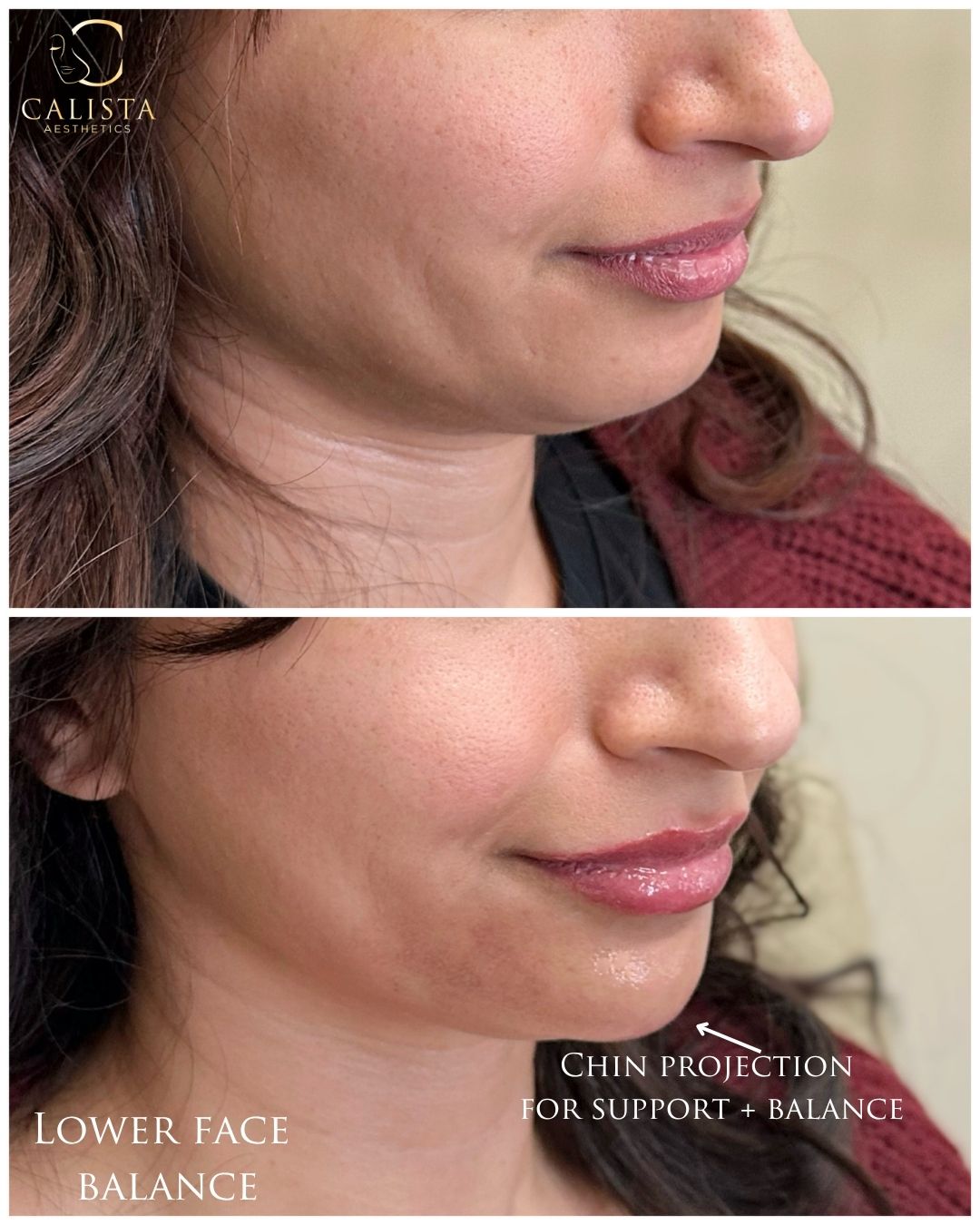
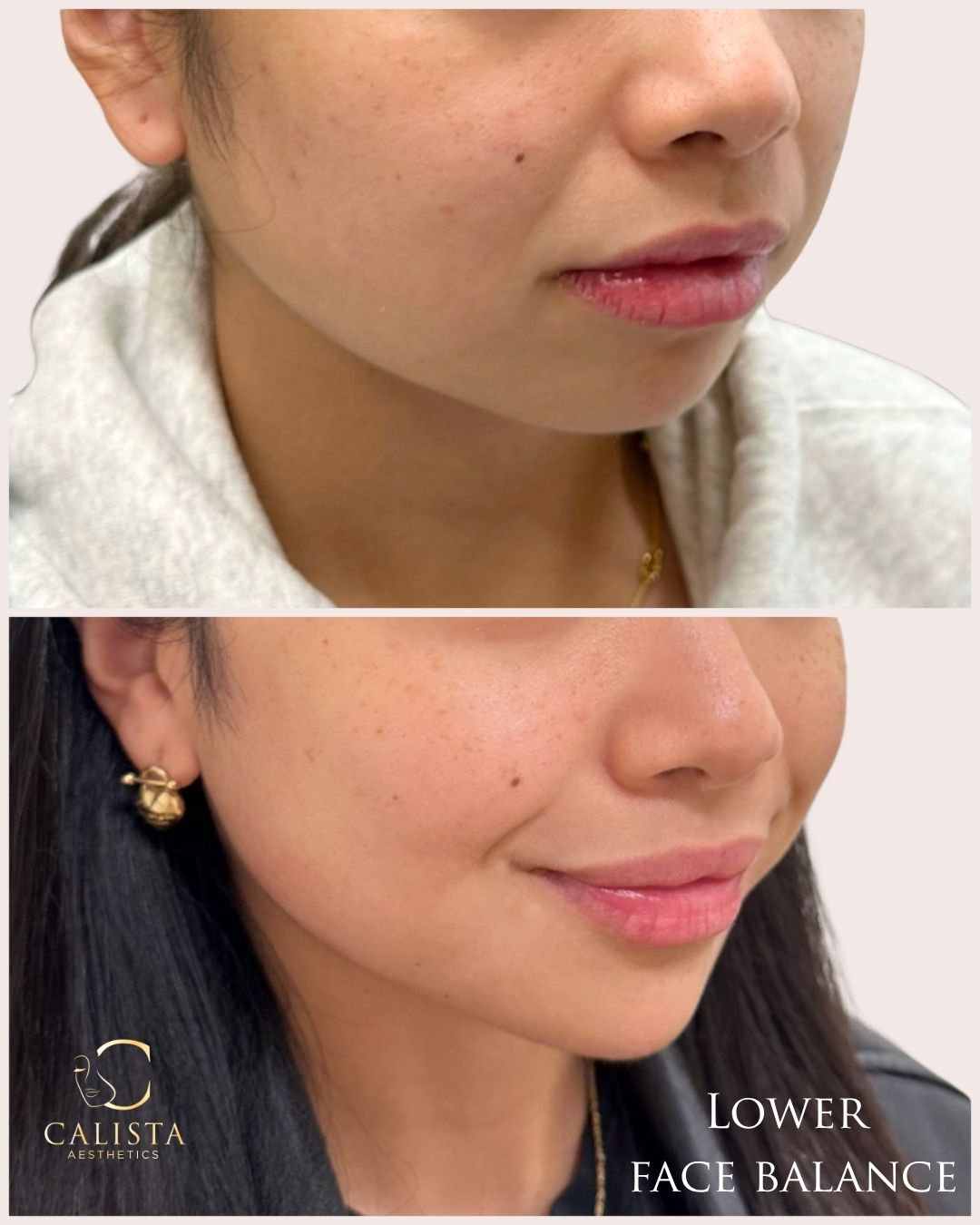
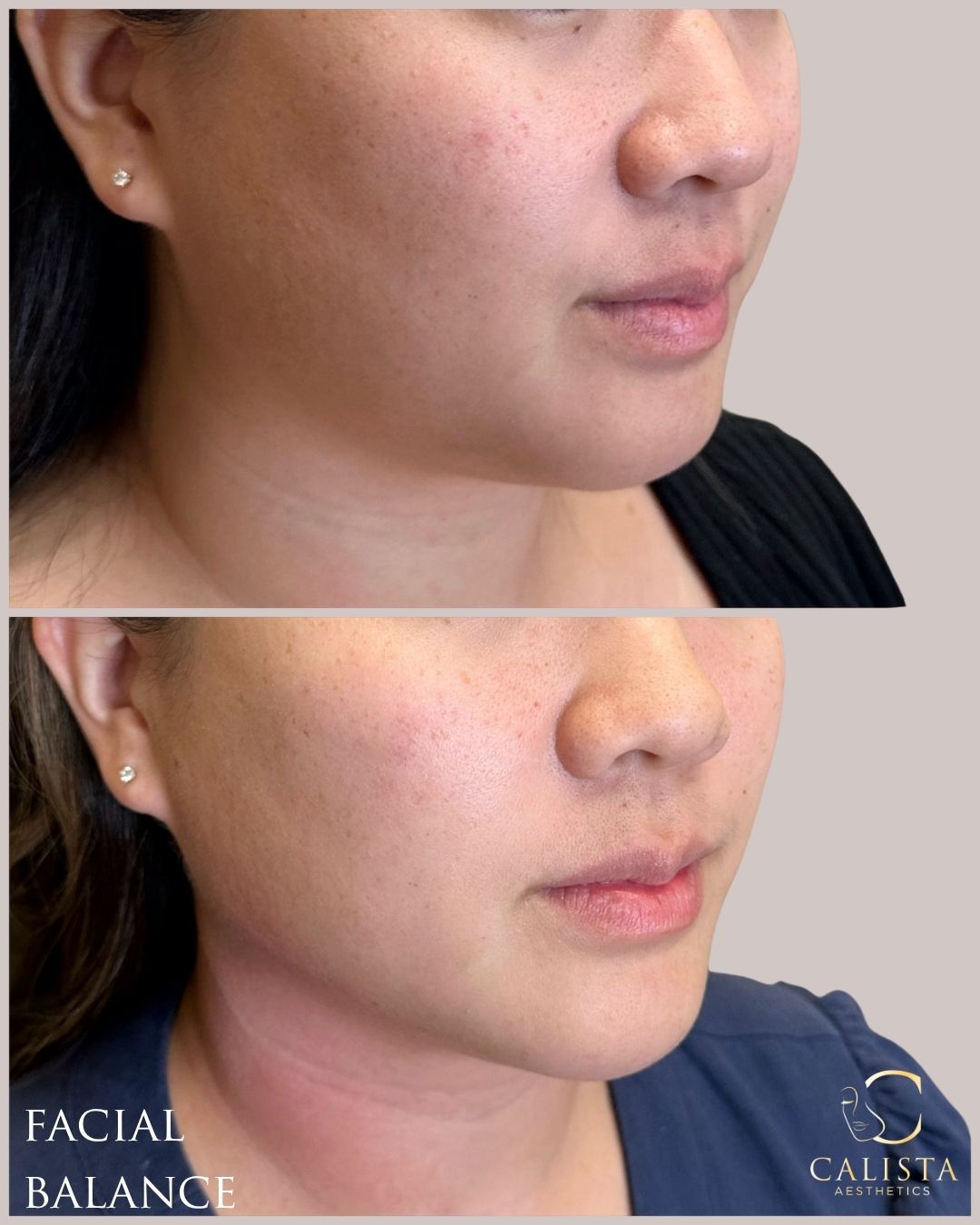
These photographs show combined-treatment cases. They do not document chin-filler duration or product-study outcomes.
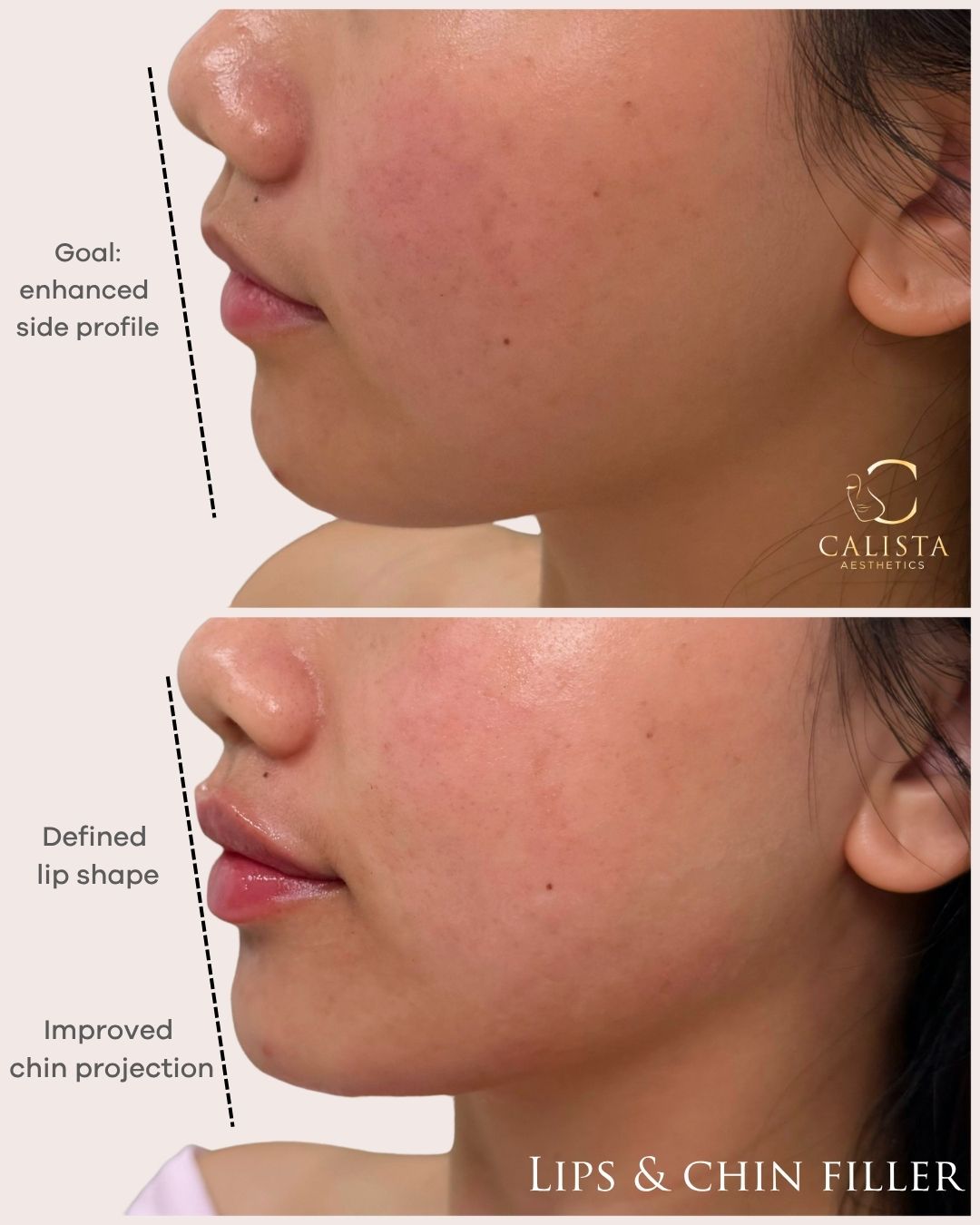
Chin filler adds volume to change chin shape or projection. Certain HA products are FDA-approved to improve the chin profile in adults over 21. Defyne and Lyft’s chin indications specifically cover mild to moderate chin retrusion, meaning a chin that sits farther back in the profile. These are examples of approved products, not a statement that Calista uses or offers each brand. Defyne FDA approval, Lyft FDA approval.
Filler adds soft-tissue volume; it does not reposition the jawbone. Significant loose skin can also affect the visible outcome: Voluma XC’s chin study excluded people with substantial loose skin of the chin, neck, or jaw. Your clinician should assess whether the concern is chin projection, skin laxity, or something requiring a different approach. Manufacturer study precautions.
The product names matter because evidence from cheeks, lips, or the jawline cannot simply be applied to the chin.
These studies used different comparisons and assessments. The percentages do not establish which product is best for you or rank their longevity. They describe aesthetic improvement at scheduled follow-ups, not a deadline when every trace of filler disappears.
Added volume and early swelling can both affect how the chin looks after treatment. In the Voluma XC chin study, the patient label reports that most side effects were mild and generally resolved in 2–4 weeks; some persisted longer than 30 days. This describes reactions after that product’s treatment, not a universal deadline for a settled chin filler result. Voluma XC chin patient information, risks section.
Reactions easing and a clinician confirming the result are different milestones. Ask when your clinician wants to reassess your chin and how to raise a concern before that visit. Immediate appearance alone should not determine whether more filler is needed. Follow your clinician’s instructions and review our dermal filler aftercare guide.
The filler material and treatment area affect duration; the underlying tissue structure, product type, and volume used also affect the result. Those factors help explain why a study’s duration claim cannot predict one person’s outcome. FDA filler information.
An early touch-up aims to refine the initial treatment. Later maintenance involves reassessing a previous result. The Defyne and Voluma XC chin studies allowed optional early touch-ups and later retreatment; they do not establish that everyone should have another injection every six or 12 months. Defyne study schedule, Voluma XC study schedule.
Useful consultation questions include which exact product is proposed, what its chin-specific evidence shows, what change is realistic for your anatomy, and how existing filler will be assessed before further treatment. Discuss the expected follow-up, risks, and total cost before committing to a plan.
Calista’s menu lists $800 per standard-area syringe, with facial-balancing bundles of $1,500 for two syringes, $2,100 for three, and 15% off list price for four or more. These prices are menu options, not recommendations for how much filler belongs in the chin. A bundle may cover an assessed plan across facial areas; its total does not mean every syringe is allocated to the chin.
Your assessed plan determines the amount, applicable bundle, allocation, and total. Check the current filler menu and our separate chin filler cost and payment guide for pricing details.
Filler is a medical procedure. Product-specific allergies, medical history, and treatment-site concerns need review before treatment. Voluma XC’s safety information includes severe allergies and allergies to lidocaine or bacterial proteins among its contraindications. Manufacturer safety information.
Accidental injection into a blood vessel can cause tissue death, blindness, or stroke. Seek immediate medical attention for unusual pain, vision changes, white, gray, or blue skin near the injection site, or stroke symptoms during or shortly after treatment. Stroke symptoms can include sudden difficulty speaking, weakness, facial drooping, or trouble walking. FDA safety guidance.
Hyaluronidase can reduce HA filler, but complete reversal, restoration of your original appearance, or reversal of a complication cannot be guaranteed. Removal procedures have their own risks. Discuss these limits rather than treating dissolvability as a safety guarantee. Original hyaluronidase study, FDA removal information.
HA filler provides a temporary change through injections. A chin implant is placed surgically and may be considered when a longer-term structural change is the goal. Surgery has its own recovery and risks, including infection, altered sensation, and implant displacement. Neither option is automatically better; anatomy and goals should guide a qualified clinician’s assessment. ASPS chin surgery information, ASPS surgical risks.
Review chin filler consultation information in Santa Ana or consultation and booking information. Bring your questions about product choice, expected results, follow-up, risks, and budget. Calista Aesthetics is in Santa Ana’s South Coast Metro.
Certain HA chin fillers have evidence of improved appearance for up to about one year. Duration depends on the specific product and treatment; an individual result is not guaranteed.
In the Voluma XC chin study, most side effects generally resolved in 2–4 weeks, although some lasted longer. Reactions easing does not establish a settled result; ask your clinician when to reassess.
There is no universal reinjection schedule. An early touch-up and later maintenance serve different purposes, and any additional treatment should follow reassessment with your clinician.
HA filler may be reduced with hyaluronidase, but complete reversal, return to your original appearance, and reversal of complications cannot be guaranteed. Removal procedures also carry risks.
The amount requires an individual assessment. A menu price or facial-balancing bundle does not determine how much filler is appropriate for the chin or how it is allocated.
The menu lists $800 per standard-area syringe, $1,500 for two, $2,100 for three, and 15% off list price for four or more. Your assessed plan determines allocation, bundle eligibility, and total.
A natural-first next step
Review your goals, the amount of filler in your assessed plan, and the applicable pricing before treatment. Calista Aesthetics is in Santa Ana’s South Coast Metro.
A $100 non-refundable booking deposit is due when you book. It goes toward your consultation or treatment at that visit. See the full Booking Policy.